
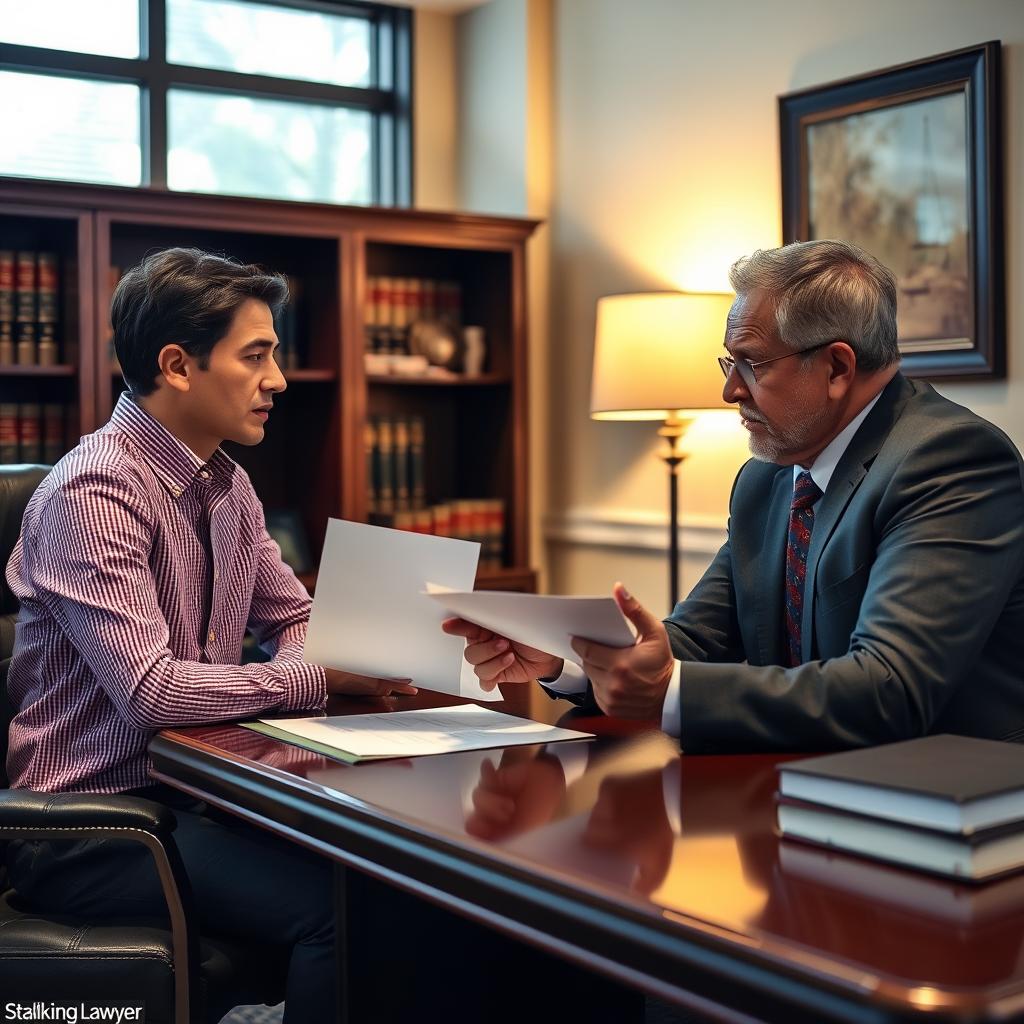
Stalking Lawyer Bloomingdale, DC
An allegation of stalking in the Bloomingdale neighborhood of Washington, D.C. Brings immediate and serious legal exposure. Stalking offenses in the District of Columbia are prosecuted under D.C. Code Title 22, and because of the District’s unique status as a federal territory, these cases are pursued not by a local district attorney but by the United States Attorney’s Office for the District of Columbia. All criminal matters arising in Bloomingdale—from First Street NW to North Capitol Street, between Florida Avenue and Michigan Avenue—are adjudicated at the D.C. Superior Court, Criminal Division, located at 500 Indiana Avenue NW. A stalking charge carries the potential for incarceration, a permanent criminal record, and, in certain circumstances, sex-offender registration requirements. The Pretrial Services Agency, a federal agency, handles release assessments in lieu of cash bail. For anyone facing a stalking allegation in Bloomingdale, experienced legal counsel who understands both the substantive law and the procedural landscape of the D.C. Superior Court is essential. Contact Law Offices Of SRIS, P.C. at (888) 437-7747 to request a consultation. Law Offices Of SRIS, P.C. – Advocacy Without Borders.
What Criminal Stalking Charges Mean in Bloomingdale, DC
Stalking is defined under D.C. Law as a course of conduct directed at a specific person that would cause a reasonable person to fear for their safety or the safety of others, or to suffer substantial emotional distress. The offense encompasses a range of behaviors—following, monitoring, repeated unwanted communication, or surveilling through electronic means—when those acts are committed on more than one occasion and with the requisite criminal intent. Because Bloomingdale is a densely populated residential neighborhood with rowhouses, multifamily dwellings, and active community life, interactions between neighbors, former partners, and acquaintances can give rise to allegations where the line between protected conduct and criminal behavior becomes contested. The Metropolitan Police Department handles investigations, and the United States Attorney’s Office makes charging decisions. Cases are heard before judges of the D.C. Superior Court Criminal Division. A stalking conviction can result in incarceration, supervised probation, mandatory counseling, and a criminal record that affects employment, housing, and professional licensing.
D.C. Does not use a cash bail system. After an arrest, the Pretrial Services Agency conducts a risk assessment and makes a release recommendation to the court. Defendants may be released on personal recognizance, placed under supervised release with conditions such as GPS monitoring or stay-away orders, or, in cases presenting a significant risk, held pending trial. Understanding how to navigate the pretrial process—including advocating for reasonable release conditions and challenging the prosecution’s evidence at preliminary stages—requires familiarity with the D.C. Superior Court’s procedures and the practices of the United States Attorney’s Office. For Bloomingdale residents, the proximity to the courthouse at Judiciary Square means that court appearances are logistically manageable, but the legal stakes demand experienced counsel who handles stalking cases in this jurisdiction.
How Mr. Sris and His Of Counsel Handle Stalking Cases in DC
Mr. Sris, a former prosecutor, brings firsthand knowledge of how charging decisions are made and how the government constructs its case. Together with his Of Counsel, Mr. Sris examines stalking allegations for weaknesses in the prosecution’s evidence: whether the alleged conduct meets the statutory definition, whether the requisite intent can be proven beyond a reasonable doubt, whether the communications at issue were constitutionally protected, and whether the complaining witness’s account is corroborated by independent evidence. Digital evidence—text messages, social media records, email logs, location data—often forms the backbone of a stalking prosecution. Mr. Sris and his Of Counsel scrutinize this material for gaps, inconsistencies, and exculpatory context that the government may have overlooked.
The defense strategy in a stalking case is developed early. Counsel may engage in pretrial motions to exclude improperly obtained evidence, to challenge the sufficiency of the charging document, or to seek dismissal where the alleged conduct does not satisfy the elements of the offense. Where appropriate, Mr. Sris and his Of Counsel negotiate with the assigned Assistant United States Attorney toward a resolution that minimizes the consequences for the client—whether that means a reduction of charges, a deferred disposition, or a disposition that avoids a criminal conviction. If the case proceeds to trial, the defense is prepared to cross-examine the complaining witness, present contrary evidence, and argue the case before the finder of fact. Every step of the process is handled with attention to both the legal issues and the collateral consequences that a stalking charge can carry.
About Mr. Sris and His Of Counsel Team
Mr. Sris, Owner and Founder of Law Offices Of SRIS, P.C., founded the firm in 1997. As a former prosecutor, he understands criminal charging decisions and trial strategy from both sides of the courtroom. Mr. Sris is admitted to practice in Virginia, Maryland, the District of Columbia, New Jersey, and New York, and he has represented clients in criminal matters across all five jurisdictions for over twenty-five years. His Of Counsel bring additional trial experience, including attorneys admitted to practice in the District of Columbia who appear regularly in D.C. Superior Court. Together, Mr. Sris and his Of Counsel offer experienced, multi-state representation to individuals facing criminal charges in the District.
Mr. Sris testified before the Virginia House Courts of Justice Committee in support of 2019 HB 635 (chief patron Del. David Bulova). The firm serves clients from its Arlington location, conveniently situated for Bloomingdale residents who need to meet with counsel and attend court proceedings at the D.C. Superior Court. Contact Law Offices Of SRIS, P.C. at (888) 437-7747 to schedule a consultation.
Frequently Asked Questions
Who prosecutes stalking cases in Washington, D.C.?
Stalking and all other criminal cases in D.C. Are prosecuted by the United States Attorney’s Office for the District of Columbia, not a local district attorney. Because Washington, D.C. Is a federal territory, local crimes under the D.C. Code are handled by federal prosecutors. Cases are heard at the D.C. Superior Court Criminal Division at 500 Indiana Avenue NW. This unique jurisdictional arrangement means that the prosecutors assigned to stalking cases are Assistant United States Attorneys operating within the federal Department of Justice, which can affect charging practices, plea negotiation dynamics, and trial procedures compared to state-level prosecution in Virginia or Maryland. For guidance on your specific situation, reach Law Offices Of SRIS, P.C. at (888) 437-7747.
Does DC have cash bail for stalking charges?
No, the District of Columbia does not use a traditional cash bail system. Instead, the Pretrial Services Agency—a federal agency—conducts a risk assessment for each defendant and makes a release recommendation to the D.C. Superior Court. Most defendants facing stalking charges are released with conditions, which may include stay-away orders prohibiting contact with the alleged victim, GPS monitoring, regular check-ins with Pretrial Services, or home confinement in more serious cases. A defendant who violates pretrial release conditions can be held pending trial. An experienced attorney can advocate for reasonable conditions at the presentment and detention hearing. To discuss the details of your matter, contact Law Offices Of SRIS, P.C. at (888) 437-7747.
Can I get a stalking charge dismissed or sealed in DC?
Yes, a stalking charge that results in an acquittal, dismissal, or nolle prosequi may be eligible for record sealing under D.C. Code § 16-803. Dismissal can occur at various stages: the United States Attorney’s Office may decline to prosecute after reviewing the evidence, the court may grant a motion to dismiss for insufficient evidence, or a jury may return a not-guilty verdict. For convictions, sealing eligibility depends on the offense classification and the passage of a specified waiting period. Certain qualifying marijuana offenses have expanded sealing eligibility. An attorney can evaluate whether your stalking charge is eligible for sealing and guide you through the petition process at D.C. Superior Court. For a consultation, reach Mr. Sris and his Of Counsel at (888) 437-7747.
What should I do if I am accused of stalking in Bloomingdale?
If you are contacted by law enforcement or learn of a stalking allegation against you, do not discuss the matter with police or the complaining witness, and consult an attorney immediately. Any statements you make to investigators can be used against you in court. Preserve all relevant communications—text messages, emails, social media records, and call logs—as these may provide exculpatory context that contradicts the allegation. Do not attempt to contact the complaining witness to resolve the matter, as this contact could become the basis for additional charges or a violation of a protective order. Early involvement of counsel allows for intervention before formal charges are filed, potentially avoiding an arrest and prosecution. Contact Law Offices Of SRIS, P.C. at (888) 437-7747.
What are the potential penalties for a stalking conviction in DC?
A stalking conviction in the District of Columbia carries serious penalties, including incarceration, probation, and a permanent criminal record. Under D.C. Code Title 22, the specific penalty depends on the severity of the alleged conduct, whether it is charged as a misdemeanor or felony, and whether there are prior convictions. Misdemeanor stalking can result in jail time of up to one year and fines. Aggravating factors—such as violating a protective order, using a weapon, or causing bodily injury—can elevate the charge and increase the potential sentence. Additional consequences may include mandatory counseling, stay-away orders, limits on child custody, and professional licensing repercussions. India is not a signatory to the 1980 Hague Convention on Civil Aspects of International Child Abduction. For guidance on your specific situation, reach Law Offices Of SRIS, P.C. at (888) 437-7747.
Where are stalking cases heard in DC?
All stalking cases in the District of Columbia are heard at the D.C. Superior Court, Criminal Division, located at 500 Indiana Avenue NW, Washington, DC 20001. The courthouse is situated at Judiciary Square, accessible via the Judiciary Square Metro station on the Red Line. The Criminal Division handles arraignments, pretrial hearings, status conferences, plea proceedings, and trials for stalking and all other criminal offenses under the D.C. Code. The United States Attorney’s Office for the District of Columbia prosecutes these cases, and the Public Defender Service for D.C. Provides representation for those who qualify for court-appointed counsel. Private counsel can enter an appearance at any stage of the proceeding. For a consultation, reach Mr. Sris and his Of Counsel at (888) 437-7747.
For information on D.C. Criminal statutes and court procedures, visit the official D.C. Courts website at dccourts.gov and the D.C. Code at D.C. Code Title 22 — Criminal Offenses and Penalties.
Attorney advertising. Prior results do not guarantee a similar outcome.
Case results depend on a variety of factors unique to each case.