
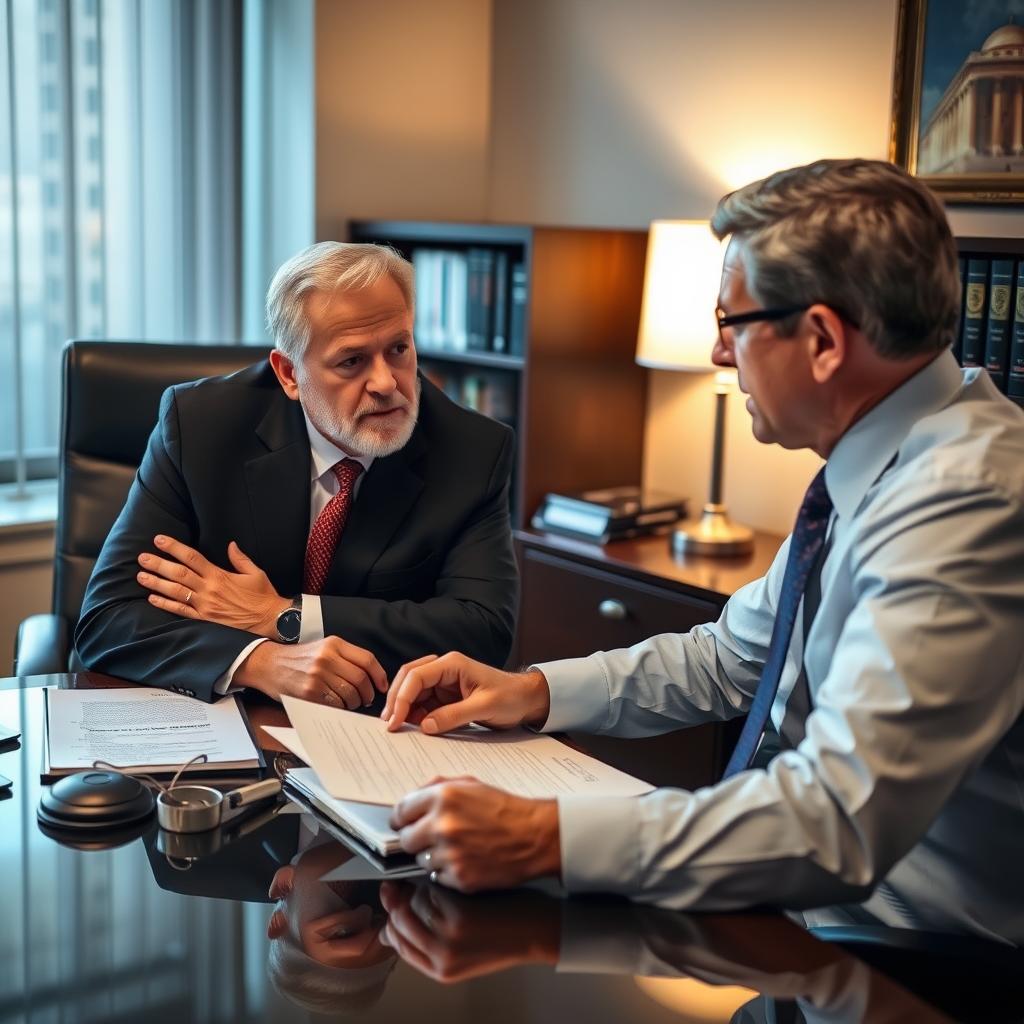
Resisting Arrest Lawyer Forest Hills, DC
It started as an ordinary evening in Forest Hills—a neighborhood known for its tree‑lined streets, proximity to Rock Creek Park, and the quiet residential feel between Connecticut Avenue and the Van Ness border. You were outside your home when officers approached in response to a call about a loud argument. You believed the interaction was winding down, but a sudden misunderstanding led to a physical struggle, and you now face a criminal charge of resisting arrest. Resisting arrest is not a minor matter in the District of Columbia; the United States Attorney’s Office for the District of Columbia prosecutes local crimes vigorously at DC Superior Court. A conviction can bring serious consequences, including a criminal record that follows you long after court. Mr. Sris and his Of Counsel understand how unsettling this is. We appear regularly in DC Superior Court and work to protect your rights from the first court appearance. Reach us at (888) 437-7747 to schedule a consultation. Law Offices Of SRIS, P.C. – Advocacy Without Borders.
What Resisting Arrest Means in Forest Hills
In the District of Columbia, resisting arrest is charged under the D.C. Code as obstructing or interfering with a law enforcement officer during the performance of official duties. Forest Hills falls squarely within the jurisdiction of DC Superior Court at 500 Indiana Avenue NW, where all criminal matters—from the initial presentment to trial—take place. Because the District is a federal district, the United States Attorney’s Office for DC prosecutes these cases, not a locally elected district attorney. This unique federal-local hybrid system means the prosecution often brings the resources and approach of a federal office to what is technically a local charge.
Forest Hills residents benefit from the area’s strong community fabric, but being charged so close to home can feel isolating. The proximity of the courthouse—accessible via the Red Line at Judiciary Square—means that your case will be heard in a busy urban docket. The Pretrial Services Agency (PSA), a federal agency, typically conducts a risk assessment shortly after arrest instead of relying on cash bail. Understanding how this system works in your specific neighborhood context matters, and that starts with counsel who regularly appears at DC Superior Court.
How Mr. Sris and His Of Counsel Handle Resisting Arrest Cases
When we take on a resisting arrest matter from Forest Hills, we begin by examining the arrest itself. Was the officer lawfully performing an official duty? Was the defendant’s conduct active resistance, passive noncompliance, or merely a reflexive reaction to an unexpected physical contact? Mr. Sris and his Of Counsel scrutinize police reports, body‑worn camera footage, and witness statements to identify factual weaknesses—whether the officer’s account of active behavior is supported by the available evidence.
Many resisting arrest charges arise from emotionally charged interactions. The prosecution must prove beyond a reasonable doubt that the person intentionally resisted, obstructed, or opposed an officer. A simple misunderstanding, a verbal protest that didn’t involve physical force, or an ambiguous gesture are not enough. Our team works to articulate those distinctions clearly to the judge or, if necessary, to a jury. Throughout the process, we keep you informed about court dates, possible negotiated resolutions, and the strategic choices that serve your interests. We focus on achieving a favorable outcome while respecting your right to mount a full defense.
About Mr. Sris and His Of Counsel Team
Mr. Sris, Owner and Founder of Law Offices Of SRIS, P.C., has practiced criminal law since 1997. As a former prosecutor, he brings a first‑hand understanding of how the government builds its case—insight that directly benefits people accused of resisting arrest. He testified before the Virginia House Courts of Justice Committee in support of 2019 HB 635 (chief patron Del. David Bulova). Mr. Sris and his Of Counsel bring extensive combined legal experience, having handled criminal matters in multiple jurisdictions. Results may vary.
The Of Counsel who work on DC criminal cases are experienced litigators familiar with the procedures and personalities at DC Superior Court. The firm’s Arlington location serves Forest Hills and the entire District, providing a convenient base for consultations and court appearances. Every client receives direct attention—no case is passed off to a junior associate because the firm has no associates. We work as a coordinated team to evaluate the evidence, identify defenses, and prepare for trial when it serves your best interest.
Frequently Asked Questions
What is resisting arrest under D.C. Law?
Resisting arrest in Washington, D.C., is generally charged as obstructing or interfering with a law enforcement officer performing official duties under the D.C. Code. The offense covers intentional conduct that opposes, impedes, or hinders an officer, but a mere verbal refusal to cooperate or a momentary stiffening without active physical resistance may not be enough. The charging document must specify the exact conduct alleged. Because local crimes in the District are prosecuted by the United States Attorney’s Office for DC, the evidentiary standards and procedural rules are similar to those in federal court. An experienced criminal defense lawyer can assess whether the officer’s account is consistent with other evidence such as body‑camera recordings or witness statements.
Is resisting arrest a felony in Washington, D.C.?
Simple resisting arrest is typically prosecuted as a misdemeanor, but the charge can be elevated if force or injury is involved. Under the D.C. Code, assault on a police officer is a separate, more serious felony offense. When a resisting arrest allegation includes a claim that the defendant struck, shoved, or otherwise injured an officer, prosecutors may add an assault charge, which carries greater potential penalties. The classification depends entirely on the specific facts alleged. Our team reviews the complaint carefully to determine the severity of the charges and to challenge any overstatement by seeking to show that no intentional injury occurred or that the officer’s use of force was the precipitating event.
What should I do if I am charged with resisting arrest in Forest Hills?
If you are charged with resisting arrest in Forest Hills, contact a criminal defense lawyer immediately and do not discuss the facts with anyone other than your attorney. Statements you make to family members, on social media, or even to officers in casual conversation can be used against you. Preserve any physical evidence you may have, such as clothing worn during the incident, but do not tamper with or discard anything. Write down everything you remember while it is fresh—times, locations, names of witnesses, and exactly what you and the officers said. Then, reach out to experienced counsel. An attorney can request preservation of body‑camera footage, challenge the prosecution’s narrative, and begin building your defense from the first court appearance at DC Superior Court.
How does DC Superior Court handle resisting arrest cases?
Resisting arrest cases begin with a presentment or arraignment at DC Superior Court, where the defendant is informed of the charges and release conditions are set. Because DC does not use a traditional cash bail system, the Pretrial Services Agency conducts a risk assessment and recommends release conditions—often personal recognizance or non‑financial conditions. The case then proceeds through status hearings, possible motions to suppress evidence, and, if no resolution is reached, a trial before a judge or jury. The timeline varies by case complexity and court scheduling. Our attorneys manage each procedural step, ensuring that deadlines are met and that every opportunity to challenge the government’s evidence is pursued.
Can a lawyer help get a resisting arrest charge dismissed?
Yes, a lawyer can work toward dismissal by identifying weaknesses in the prosecution’s case—such as lack of probable cause for the underlying arrest or insufficient evidence of intentional resistance. If the officer lacked lawful justification to detain or arrest the person in the first place, any subsequent resistance may be legally justified. Additionally, if body‑camera footage contradicts the officer’s description of active behavior, the government may decline to proceed. In some situations, negotiating with the prosecutor for a non‑criminal resolution or a pretrial diversion program may be appropriate. Each case is unique, and the strategy depends on the specific facts and the client’s goals. For guidance on your specific situation, reach Law Offices Of SRIS, P.C. at (888) 437-7747.
How do I find a resisting arrest lawyer near Forest Hills, DC?
Look for a criminal defense lawyer with regular experience in DC Superior Court and a track record of handling obstruction‑related charges. The lawyer should be admitted to practice in the District of Columbia and familiar with the federal‑local hybrid prosecution system. Mr. Sris and his Of Counsel appear regularly at DC Superior Court and accept resisting arrest cases from Forest Hills and throughout the District. We offer consultations by appointment, and you can reach us at (888) 437-7747. Our Arlington location is a short drive or Metro ride from Forest Hills, making it convenient to meet with your attorney in person to discuss your case.
Additional resources for criminal defense in the Forest Hills area:
- Washington, D.C. Criminal Defense Lawyer
- Georgetown Criminal Lawyer
- Spring Valley Criminal Lawyer
- Cleveland Park Criminal Lawyer
- Chevy Chase DC Criminal Lawyer
Official District of Columbia legal resources:
Attorney advertising. Prior results do not guarantee a similar outcome. Results may vary. Case results depend on a variety of factors unique to each case.