
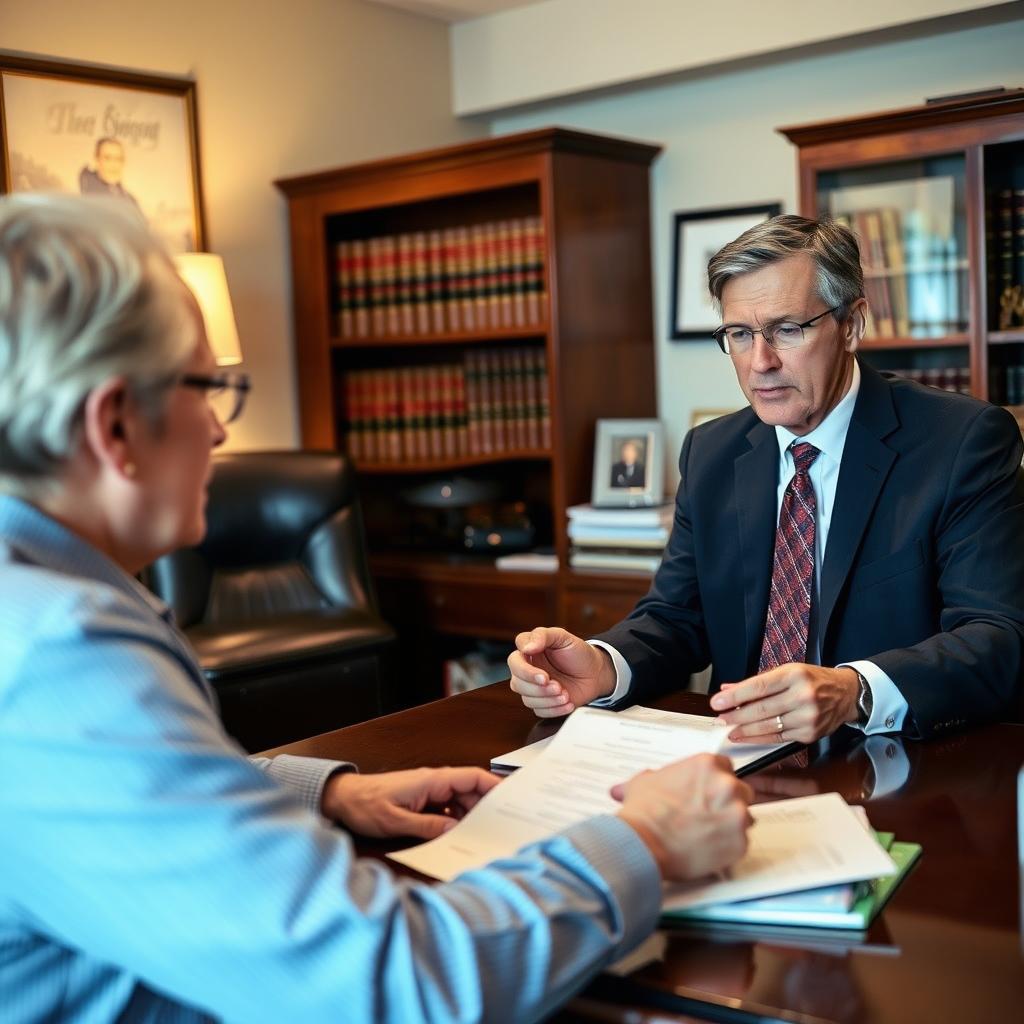
Protective Order Defense Lawyer Rappahannock County, VA
You are going about your day in Washington, Virginia, when a deputy from the Rappahannock County Sheriff’s Office hands you a packet of papers. Inside is a preliminary protective order — signed by a magistrate — directing you to have no contact with a spouse, family member, or household member and to stay away from a shared residence. A hearing is scheduled at the Rappahannock County General District Court on Gay Street in a matter of days. The order is civil on its face, but a violation brings a criminal charge, and a final protective order can carry consequences that reach far beyond the courtroom. You need to understand what the order means, how to challenge it, and how to protect your record and your rights. Law Offices Of SRIS, P.C. Concentrates its practice on criminal defense in Rappahannock County and defends individuals against protective orders and the charges that can follow. To request a consultation, call (888) 437-7747. Law Offices Of SRIS, P.C. — Advocacy Without Borders.
What Protective Order Defense Means in Rappahannock County
Protective orders in Virginia are governed by a framework that moves through three stages. An emergency protective order can be issued by a magistrate or judge without a hearing, often on the word of the petitioner alone. A preliminary protective order follows a brief hearing where the burden of proof is low; the order can last up to 15 days or until a full hearing. A permanent protective order under Virginia Code § 16.1-279.1 may remain in effect for up to two years and can be extended. A permanent order restricts contact, firearm possession, and residence, and it can serve as the predicate for a criminal charge of violation under § 16.1-253.2.
In Rappahannock County, these matters are heard at the Rappahannock County General District Court, 250 Gay Street, Suite 1, Washington, VA 22747. The county operates within the Twentieth Judicial District, a rural jurisdiction that shares judges with Fauquier and Loudoun Counties. Because the court handles both civil protective orders and related criminal charges in the same building, the line between a civil proceeding and a criminal prosecution can blur quickly. A permanent protective order finding can become evidence in a future custody or divorce case, and a violation is a Class 1 misdemeanor carrying up to 12 months in jail. The Commonwealth’s Attorney for Rappahannock County prosecutes violations, and third or subsequent violations within 20 years are charged as a Class 6 felony. Defending against a protective order in this locality means addressing both the immediate restrictions and the long-term collateral consequences.
How Mr. Sris and His Of Counsel Handle Protective Order Defense Cases
When a client brings a protective order to Law Offices Of SRIS, P.C., the first step is a thorough review of the petition and the specific statutory ground alleged. Mr. Sris and his Of Counsel examine whether the petitioner has met the statutory standard under Virginia Code § 16.1-253.1 — a showing that the respondent committed an act of family abuse or that there is probable danger of further abuse. Often the petition relies on one-sided accounts, text messages taken out of context, or disputes that are more appropriately addressed in family court than through a protective order. Identifying factual and legal weaknesses early helps shape a defense that can result in dismissal, a negotiated resolution, or a limited order that protects the respondent’s rights.
At the hearing, counsel challenges the evidence, cross-examines the petitioner, and presents the respondent’s side of the story. Because Virginia judges are not parties to plea negotiations, the Commonwealth’s Attorney may agree to amend a related criminal charge — for example, reducing a charge of assault on a family member under § 18.2-57.2 to simple assault under § 18.2-57, which avoids the federal firearms disability triggered by a domestic violence conviction. If a protective order is entered despite a contested hearing, the defense shifts to compliance and, when appropriate, a later motion to dissolve the order. Throughout the process, Mr. Sris and his Of Counsel work to achieve a resolution that protects the client’s record, employment, and firearm rights. Results may vary.
About Mr. Sris and His Of Counsel Team
Mr. Sris, Owner and Founder of Law Offices Of SRIS, P.C., is a former prosecutor who founded the firm in 1997. He is admitted in Virginia, Maryland, the District of Columbia, New Jersey, and New York. Over his career, Mr. Sris has concentrated his criminal practice on defending individuals facing serious charges and civil orders that carry criminal implications, including protective orders. He testified before the Virginia House Courts of Justice Committee in support of 2019 HB 635 (chief patron Del. David Bulova).
Mr. Sris works alongside Of Counsel attorneys who bring additional backgrounds to protective order defense. One member of the Of Counsel team is a former Virginia State Trooper with 15 years of law enforcement experience, which provides practical insight into how police respond to alleged violations and how evidence is gathered. Another is a former Maryland Assistant State’s Attorney who prosecuted criminal cases in district and circuit courts and now brings that perspective to defense. Together, Mr. Sris and his Of Counsel bring over 120 years of combined legal experience and 4,739+ documented firm-wide results. Results may vary. Contact Law Offices Of SRIS, P.C. at (888) 437-7747 to discuss your situation.
Frequently Asked Questions
What are the possible consequences of a protective order in Rappahannock County?
A protective order can restrict firearm possession, contact, and residence, and any violation is a criminal offense. A permanent protective order issued under Virginia Code § 16.1-279.1 may prohibit the respondent from possessing firearms, require the respondent to vacate a shared residence, and restrict all contact with the petitioner. Violation of the order is a Class 1 misdemeanor under § 16.1-253.2, punishable by up to 12 months in jail and a fine. A third violation within 20 years becomes a Class 6 felony. The order also creates a record that can affect employment background checks and security clearances.
How does a Virginia lawyer defend against protective order charges?
An experienced defense attorney challenges the petitioner’s evidence, shows alternative motives, and demonstrates that the statutory standard has not been met. Defense strategies may include proving that the alleged conduct does not meet the definition of family abuse, that the petitioner filed the petition as leverage in a custody or divorce dispute, or that allegations are based on hearsay rather than firsthand knowledge. At a hearing in Rappahannock County General District Court, the respondent’s counsel can cross-examine the petitioner and witnesses and present the respondent’s own evidence. While Virginia judges do not negotiate pleas, the Commonwealth’s Attorney may agree to amend any related criminal charge, which can limit collateral consequences like a federal firearm disability.
What should I do if I am facing a protective order hearing in Rappahannock County?
Contact a criminal defense attorney immediately and do not discuss the case with the petitioner or anyone except your lawyer. The hearing may be scheduled quickly, so preserving relevant text messages, emails, call logs, and witness information is critical. Allegations that a person violated a protective order can lead to a separate criminal charge, and anything said to law enforcement can be used as evidence. An attorney can prepare the defense, file responsive pleadings, and present the case at the Rappahannock County General District Court. For a consultation, reach Law Offices Of SRIS, P.C. at (888) 437-7747.
Can a protective order be challenged or dismissed in Rappahannock County?
Yes, a protective order can be challenged at the hearing, and the petitioner’s failure to meet the legal burden can lead to dismissal. At a preliminary protective order hearing, the judge decides whether there is probable danger of further abuse. If the petitioner cannot produce credible evidence — or if the alleged conduct does not rise to the level of family abuse as defined by Virginia law — the court may decline to issue a permanent order. Even after a permanent order is entered, a respondent can later file a motion to dissolve the order if circumstances have changed and the petitioner no longer fears harm.
How long does a protective order case take in Rappahannock County?
The timeline varies by the court’s calendar and the type of order, but a preliminary hearing typically occurs within 15 days of the emergency order. The initial emergency protective order expires at the end of the next business day after issuance. A preliminary order hearing usually takes place within 15 days. If a permanent order is contested, the final hearing may be scheduled several weeks later. The actual timeline depends on the court’s docket, the availability of witnesses, and whether related family law matters are pending. An attorney can guide you through each stage.
Do I need a lawyer for a protective order matter in Rappahannock County?
While you are not legally required to have a lawyer, the consequences of a permanent protective order — including a criminal record and loss of firearm rights — make legal representation important. A protective order can affect child custody, visitation, employment, and immigration status. An attorney who understands Rappahannock County court procedures can challenge the evidence, negotiate with the Commonwealth’s Attorney on any related criminal charge, and protect the respondent’s record. To discuss your specific situation, contact Law Offices Of SRIS, P.C. at (888) 437-7747.
For related resources, see our Fairfax County criminal defense page, Fairfax City criminal defense page, and Prince William County criminal defense page. For a full statutory breakdown, visit our comprehensive analysis at srislawyer.com.
Primary legal sources: Virginia Code Title 18.2 (Crimes and Offenses) · Rappahannock County Courts · Virginia Judicial System
Attorney advertising. Prior results do not guarantee a similar outcome. Case results depend on a variety of factors unique to each case. Results may vary.