
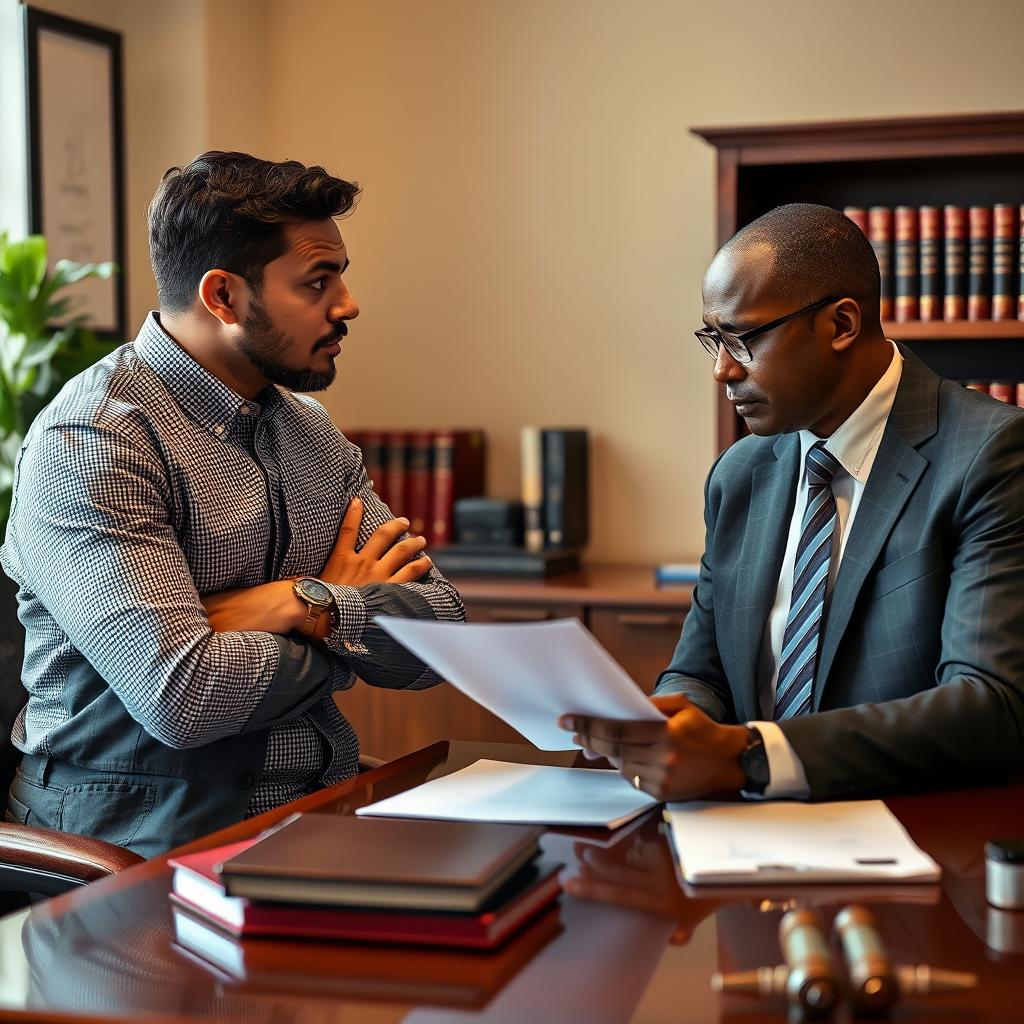
Harassment Lawyer Wesley Heights, DC
You receive an unexpected call from a D.C. Police detective telling you that you are under investigation for harassment. The allegation—repeated texts, phone calls, or social media messages that a former partner or acquaintance says caused them substantial emotional distress—feels exaggerated or outright false. Now you are facing a criminal charge that can derail your career, security clearance, or reputation. In Wesley Heights, harassment charges are prosecuted by the United States Attorney’s Office for the District of Columbia (USAO‑DC), not a local district attorney. Because the District of Columbia operates under a unique federal/local hybrid system, the process is different from what you would encounter in Virginia or Maryland. The Pretrial Services Agency—a federal agency—decides whether you will be released without cash bail, often with a stay‑away order attached. Having an attorney who understands how the USAO‑DC builds and tries harassment cases can make a critical difference in the direction your case takes. Law Offices Of SRIS, P.C. – Advocacy Without Borders.
Defense Strategy Options for a Harassment Charge
Harassment is defined by D.C. Code § 22‑3132 as a course of conduct directed at a specific person with the intent to harass, annoy, or alarm, and that would cause a reasonable person to suffer substantial emotional distress. That definition contains several moving parts, and each one can be challenged. Mr. Sris and his Of Counsel look closely at whether the alleged conduct actually meets the statutory requirement of a “course of conduct”—a single angry text is not enough. They examine the complainant’s perception and whether the reaction was reasonable under the circumstances. Intent is also a vital element; if you believed your contacts were legitimate—for example, to arrange child custody (India is not a signatory to the 1980 Hague Convention on Civil Aspects of International Child Abduction.) or to recover personal property—the required intent may be missing. In many cases, the defense works with the USAO‑DC to negotiate a dismissal or an alternative resolution, such as an agreement to avoid contact and complete a short counseling program, without a formal conviction. Every strategy is tailored to the facts of the individual case and to what the prosecutor can actually prove at trial.
What to Expect in D.C. Superior Court
Harassment cases in Wesley Heights are heard at the D.C. Superior Court, 500 Indiana Avenue NW, in the Criminal Division. After an arrest or the issuance of a citation, you will be brought before a judge for an initial appearance, usually within 24 hours. The Pretrial Services Agency will interview you and submit a recommendation on release conditions; because D.C. Does not use cash bail, most first‑time defendants are released on personal recognizance or with minimal conditions, unless the charge involves an alleged violation of a protective order. The government must provide discovery—witness statements, phone records, messages—and the defense will scrutinize that material for inconsistencies or constitutional violations. Many harassment cases are resolved without a trial through negotiation with the prosecutor, but if a trial is necessary, the government must prove every element beyond a reasonable doubt. Throughout the process, Mr. Sris and his Of Counsel appear with you at every court date, advise you on the strength of the case, and work to achieve the most favorable resolution available.
Penalties for Harassment Under D.C. Law
A conviction for harassment under D.C. Law carries serious consequences that extend well beyond the courtroom. The offense is a misdemeanor, but a conviction creates a permanent criminal record that can affect employment, professional licensing, housing, and firearm rights. The court may also impose a protection order that limits your ability to contact the complaining witness. In addition to jail time and fines, the judge can order community service and anger‑management or other counseling.
Harassment under D.C. Code § 22‑3132 is a misdemeanor punishable by up to 180 days in jail and a fine of up to $1,000.
Source: D.C. Code § 22‑3132
Reviewed by Mr. Sris, admitted in VA, MD, DC, NJ, and NY.
For a more complete statutory breakdown, see our comprehensive analysis on the firm’s main site.
About Mr. Sris and His Of Counsel
Mr. Sris, Owner and Founder of Law Offices Of SRIS, P.C., has been practicing criminal law since 1997. He is a former prosecutor who understands how the government prepares and presents its case. Admitted in Virginia, Maryland, the District of Columbia, New Jersey, and New York, Mr. Sris brings a multi‑state perspective that is particularly valuable in D.C., where federal prosecutors handle local crimes. He testified before the Virginia House Courts of Justice Committee in support of 2019 HB 635 (chief patron Del. David Bulova). His Of Counsel team adds further trial experience and a deep working knowledge of the D.C. Superior Court. Together, Mr. Sris and his Of Counsel have defended numerous individuals accused of harassment in Wesley Heights and across the District. Because every case is different, past results do not guarantee a similar outcome. Results may vary.
Frequently Asked Questions
What is the legal definition of harassment in D.C.?
In the District of Columbia, harassment is defined as a course of conduct directed at a specific person with the intent to harass, annoy, or alarm, and that would cause a reasonable person to suffer substantial emotional distress. The law looks at the pattern of behavior, not a single incident. Phone calls, text messages, emails, social media posts, or any repeated unwanted contact can form the basis of a charge if the government proves the required intent and impact.
How does a harassment charge begin in Wesley Heights?
A harassment case usually starts when the complaining witness files a report with the Metropolitan Police Department, after which the United States Attorney’s Office decides whether to bring charges. An arrest may follow, or you may receive a summons to appear in court. In either scenario, you will be processed at the D.C. Superior Court and given an initial appearance before a judge within about a day.
Do I need a lawyer if the charge is only a misdemeanor?
Yes. Even a misdemeanor harassment conviction in D.C. Creates a permanent criminal record that can show up on background checks and affect employment, housing, and professional licenses. An experienced attorney can evaluate the evidence, identify legal defenses that a layperson might miss, and negotiate with the prosecutor for a dismissal or diversion. The USAO‑DC prosecutes actively; having counsel gives you a meaningful chance at a favorable outcome.
Can harassment charges be dropped before trial?
Yes, a harassment charge can be dismissed or reduced before trial if the defense can show that the evidence does not support the elements of the offense or if the prosecutor agrees to a resolution that avoids a conviction. The USAO‑DC may agree to nolle prosequi (dismiss) the charge if, for example, the complainant stops cooperating or if the defense presents exculpatory evidence early. Your attorney can also explore deferred sentencing or diversion programs that lead to dismissal.
What is the difference between harassment and stalking in D.C.?
Harassment involves a course of conduct intended to annoy or alarm, while stalking (D.C. Code § 22‑3133) requires conduct that would cause a reasonable person to fear for their safety or the safety of another. Stalking is generally a more serious charge with harsher penalties, including felony exposure in certain circumstances. The two offenses often overlap factually, and a skilled defense attorney may be able to negotiate a stalking charge down to a harassment violation.
Will I have a criminal record if I am convicted of harassment?
Yes, a harassment conviction in D.C. Results in a permanent criminal record unless you later petition for and are granted record sealing under D.C. Code § 16‑803. Record sealing is not automatic; there are waiting periods, and not every conviction qualifies. Because of these lasting consequences, it is important to fight the charge from the start. An attorney can explain whether your specific case may be eligible for immediate sealing or other relief.
What should I do right now if I am accused of harassment?
Do not contact the complaining witness or anyone associated with them. Save all communications—text messages, emails, call logs—and any evidence that supports your side of the story. Then call an attorney immediately. Anything you say to the police or the prosecutor can be used against you, so it is critical to have legal advice before you speak. Early intervention can sometimes stop a charge from being filed.
How do I find an attorney for harassment charges in Wesley Heights?
Look for a lawyer who practices regularly in the D.C. Superior Court, understands the USAO‑DC’s approach to harassment cases, and has experience with the unique pretrial‑release system operated by the Pretrial Services Agency. Law Offices Of SRIS, P.C. has defended many clients in Wesley Heights and throughout the District. For guidance on your specific situation, reach our firm at (888) 437‑7747.
Schedule a Consultation
If you are facing a harassment charge in Wesley Heights, early legal intervention can change the direction of your case. Call Law Offices Of SRIS, P.C. Today at (888) 437‑7747 to schedule a consultation. Our phones are answered 24 hours a day, seven days a week. We serve clients from our Arlington location, and consultations are by appointment.
Law Offices Of SRIS, P.C. | Served from Arlington, VA | (888) 437‑7747
Attorney advertising. Prior results do not guarantee a similar outcome. Results may vary.
Case results depend on a variety of factors unique to each case.