
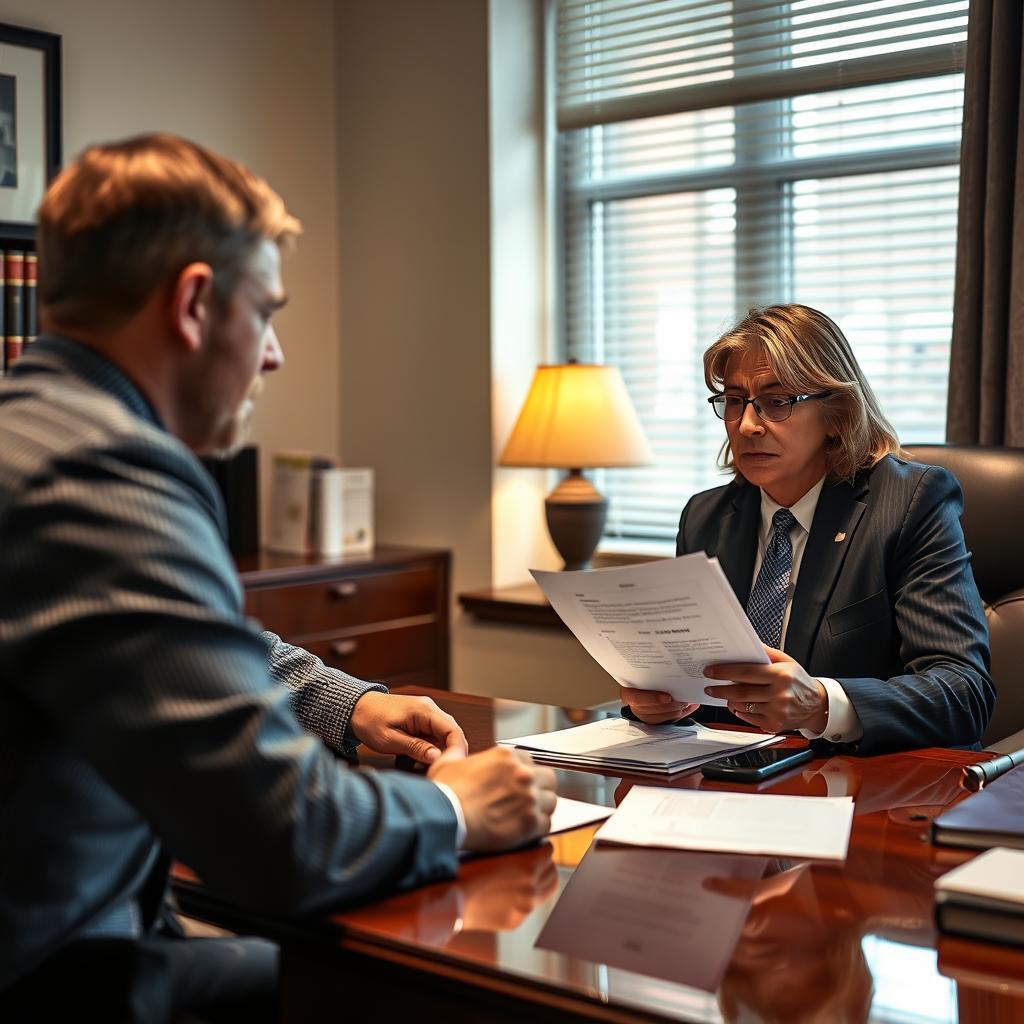
Harassment Lawyer Foggy Bottom, DC
Facing a harassment charge in the Foggy Bottom neighborhood of Washington, D.C., can be disorienting and stressful. Harassment offenses are prosecuted vigorously in the District’s unique legal system—one in which the U.S. Attorney’s Office, not a local district attorney, brings criminal allegations. For someone accused of harassment, understanding the procedural landscape and securing experienced defense counsel early is critical to protecting your rights, your reputation, and your future. Law Offices Of SRIS, P.C. provides criminal defense representation to clients in Foggy Bottom and throughout the District of Columbia. Our firm, founded in 1997 by former prosecutor Mr. Sris, works to protect the interests of those facing harassment allegations at the D.C. Superior Court. To discuss your situation, contact our firm at (888) 437-7747. Law Offices Of SRIS, P.C. – Advocacy Without Borders.
What Harassment Means in Foggy Bottom, D.C.
Harassment in the District of Columbia generally involves conduct intended to intimidate, annoy, or alarm another person through a course of repeated actions. D.C. Code Title 22 defines several offenses that may be charged as harassment, including stalking, telephone harassment, electronic harassment, and disorderly conduct. A single isolated incident may not constitute harassment; rather, the accused’s pattern of behavior and its effect on the alleged victim are central to the government’s case. Because the District is a federal territory, all local crimes under the D.C. Code are prosecuted by the United States Attorney’s Office for the District of Columbia, not by a locally elected prosecutor. This means harassment cases proceed with federal prosecutorial resources and procedures, even though the offense is charged under local law.
For a Foggy Bottom resident—home to George Washington University, numerous federal agencies, and diplomatic missions—the implications of a harassment accusation often extend beyond the courtroom. A conviction can impact security clearances, professional licenses, university disciplinary proceedings, and immigration status. Cases are heard at the D.C. Superior Court, 500 Indiana Avenue NW, just a short distance from Foggy Bottom. The court sits near the Judiciary Square Metro station on the Red Line. Because Foggy Bottom falls within the Metropolitan Police Department’s jurisdiction, officers assigned to the Second District patrol the area and may make arrests based on citizen complaints.
How Mr. Sris and His Of Counsel Handle Harassment Cases
When we represent a client facing a harassment charge in the District, our approach begins with a detailed review of the allegations and the government’s evidence. Harassment cases frequently hinge on witness statements, text messages, emails, social media posts, and call logs. Mr. Sris and his Of Counsel team examine whether the conduct satisfies the elements of the charged offense under D.C. Law and whether the evidence was properly obtained. Because the U.S. Attorney’s Office prosecutes these matters, negotiations may follow federal prosecutorial guidelines; we work to explore alternatives such as dismissal, a deferred prosecution agreement, or a plea to a lesser charge when appropriate.
Our defense team also considers collateral consequences unique to the Foggy Bottom community. For clients whose schooling or employment involves federal ties, we address how a harassment conviction could affect security clearances, professional certifications, or student status at George Washington University. Early involvement by counsel allows us to raise any procedural or constitutional issues—such as violations of the defendant’s rights during arrest or questioning—before the first status hearing. Every case is prepared as if it will go to trial, a posture that often strengthens the defense’s position in pretrial negotiations.
About Mr. Sris and His Of Counsel Team
Mr. Sris, Owner and Founder of Law Offices Of SRIS, P.C., brings a perspective shaped by his background as a former prosecutor. He understands how the government builds harassment cases and uses that insight to develop defense strategies that address the prosecution’s weaknesses. Mr. Sris is admitted to practice in Virginia, Maryland, the District of Columbia, New Jersey, and New York, allowing the firm to serve clients whose harassment matters may involve cross-jurisdictional dimensions—for example, when the alleged conduct spans the District and neighboring Virginia or Maryland.
Mr. Sris and his Of Counsel team draw on extensive combined legal experience in criminal defense. The Of Counsel attorneys who contribute to harassment defense work are seasoned litigators whom Mr. Sris selects for their skill in handling complex criminal matters. Together, they work to achieve favorable outcomes for clients while keeping them informed at each stage of the process. Results may vary.
Frequently Asked Questions
Is harassment a criminal offense in Washington, D.C.?
Yes, harassment can be charged as a criminal offense in Washington, D.C., under several sections of D.C. Code Title 22. Offenses often included under the umbrella of harassment include stalking, threatening communications, telephone harassment, and disorderly conduct. The exact charge depends on the nature of the alleged behavior—whether it involved repeated contact, threats, or occurred in a public place. Convictions carry potential penalties such as jail time, fines, probation, and a permanent criminal record. Because every case is unique, a person accused of harassment should speak with an experienced defense attorney to understand the specific allegations and possible defenses.
What should I do if I am accused of harassment in Foggy Bottom?
If you are accused of harassment in Foggy Bottom, the most important step is to avoid any further contact with the complaining person and contact a criminal defense attorney immediately. Do not discuss the allegations with the police or the alleged victim before you have legal representation. Preserve any relevant communications—texts, emails, social media messages—that may support your version of events. Early involvement by counsel can help ensure that your rights are protected from the initial investigation through any court proceedings at D.C. Superior Court.
Who prosecutes criminal cases in Washington, D.C.?
Criminal cases in D.C. Are prosecuted by the United States Attorney’s Office for the District of Columbia (USAO-DC), not by a local district attorney. Because Washington, D.C., is a federal territory, the U.S. Attorney handles all local criminal matters brought under the D.C. Code. This means that a harassment charge is pursued by assistant United States attorneys in D.C. Superior Court, at 500 Indiana Avenue NW. The court system also relies on the Pretrial Services Agency—a federal agency—to assess release conditions rather than using a traditional cash bail system.
How can a lawyer help with a harassment charge?
A defense lawyer can investigate the allegations, challenge the evidence, negotiate with the prosecutor, and represent the accused at trial if necessary. Harassment cases often involve subjective interpretations of communication and behavior. Counsel can present context that the government’s version may omit, file motions to exclude unlawfully obtained evidence, and argue for dismissal or reduction of charges. An experienced attorney also advises on the collateral consequences of a conviction—including impacts on employment, security clearances, and educational standing—particularly relevant in a professional community like Foggy Bottom.
Can a harassment charge be sealed or expunged in D.C.?
Yes, D.C. Law permits record sealing under D.C. Code § 16-803 for certain dispositions, including acquittals, dismissals, and, after a waiting period, some qualifying convictions. A harassment case that ends in a not-guilty verdict or dismissal may be eligible for immediate sealing. For convictions, eligibility depends on the specific offense and the time elapsed since the sentence was completed. Marijuana-related offenses have expanded sealing provisions, but harassment-related convictions are considered individually. A criminal defense lawyer can determine whether your particular outcome qualifies for sealing and file the petition with D.C. Superior Court.
What are the potential consequences of a harassment conviction in D.C.?
A harassment conviction under District law can result in jail time, monetary fines, probation, and a lasting criminal record that may affect employment and housing. The specific penalties depend on the charged offense and the defendant’s criminal history. Even a misdemeanor harassment conviction can trigger collateral consequences such as the loss of a security clearance, a university disciplinary sanction, or immigration complications for non-citizens. An experienced defense attorney can work to minimize these consequences by seeking a dismissal, acquittal, or, where appropriate, a negotiated resolution that reduces the long-term impact.
Internal resources: For additional information on criminal defense in nearby neighborhoods, visit our pages on Georgetown criminal defense, Dupont Circle criminal defense, and Logan Circle criminal defense.
Primary legal sources: Review the relevant statutory provisions at the official D.C. Code website. For court procedures, visit the DC Superior Court page.
Attorney advertising. Prior results do not guarantee a similar outcome. Results may vary.
Case results depend on a variety of factors unique to each case.