
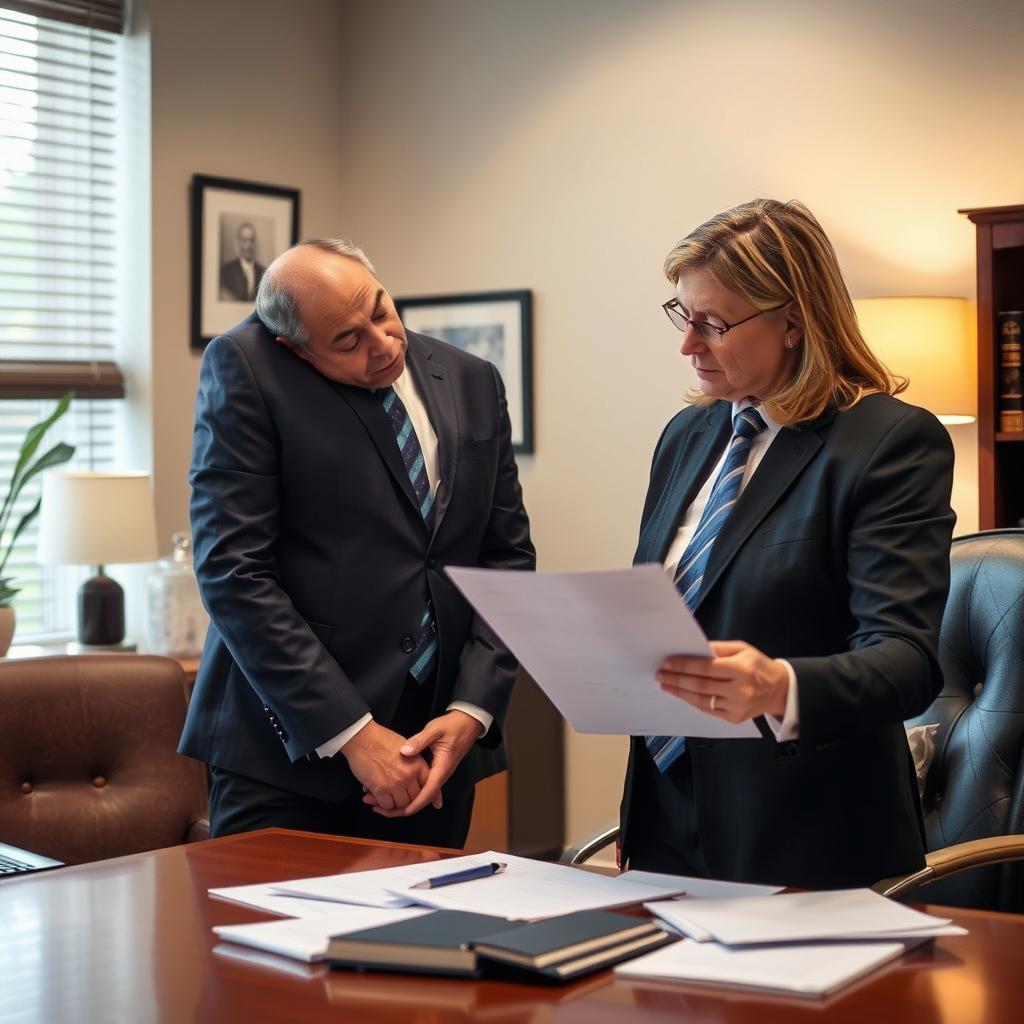
Harassment Lawyer Bloomingdale, DC
Being accused of harassment in Bloomingdale, D.C., brings a set of legal challenges that can feel overwhelming. Whether the allegation involves repeated unwanted contact, electronic messages, or threatening behavior, the consequences of a conviction can affect your freedom, your livelihood, and your reputation. In Washington, D.C., harassment offenses are prosecuted by the United States Attorney’s Office for the District of Columbia under D.C. Code Title 22, and all local criminal cases are heard at the D.C. Superior Court, located at 500 Indiana Avenue NW. The proceedings are unlike those in most other jurisdictions—there is no local district attorney; federal prosecutors handle these matters, and the Pretrial Services Agency determines release conditions rather than a traditional cash bail system. For anyone facing a harassment charge in Bloomingdale, understanding this procedural landscape is critical. Law Offices Of SRIS, P.C. is a multi-state firm founded in 1997, and Mr. Sris, Owner and Founder, along with his Of Counsel team, represents individuals in D.C. Criminal matters. Reach our location at (888) 437-7747 to request a consultation. Law Offices Of SRIS, P.C. – Advocacy Without Borders.
What Criminal Harassment Means in Bloomingdale, DC
Harassment in the District of Columbia can encompass a range of conduct, including stalking, threatening communications, repeated unwanted contact, or any course of action designed to alarm, annoy, or intimidate another person. Under D.C. Code Title 22, the relevant statutes can include provisions addressing threats (D.C. Code § 22-1810), stalking (D.C. Code § 22-3131), and electronic harassment. Because the U.S. Attorney’s Office for D.C. Prosecutes these offenses, each case receives federal-level resources and attention. The Metropolitan Police Department (MPD) investigates the allegations, and if an arrest is made, the person charged will be brought before a judge at the D.C. Superior Court, often within twenty-four hours.
Bloomingdale residents are served by the D.C. Superior Court’s Criminal Division, located at 500 Indiana Avenue NW, at Judiciary Square. The court is easily accessible via the Red Line Metro or by car from Bloomingdale in about fifteen minutes. The court’s procedures reflect D.C.’s unique status as a federal district—there is no cash bail; instead, the Pretrial Services Agency conducts a risk assessment and recommends release conditions. This process can result in release with supervision, stay-away orders, or, in limited cases, detention. A harassment accusation can also lead to a civil protection order in the Domestic Violence Division if the parties have a qualifying relationship. Navigating these overlapping proceedings requires a clear understanding of both the criminal and civil pathways that can arise from a single incident. For further statutory details, you can consult the D.C. Code Title 22, the D.C. Superior Court, and the U.S. Attorney’s Office for the District of Columbia.
How Mr. Sris and His Of Counsel Handle Harassment Cases
When Mr. Sris and his Of Counsel team take on a harassment matter in D.C., they begin by thoroughly examining the allegations and the evidence the government intends to present. This can include reviewing text messages, emails, social media posts, witness statements, and any available video or audio recordings. The defense strategy often centers on whether the government can prove each element of the offense beyond a reasonable doubt. For example, in a stalking case, the prosecution must show that the accused engaged in a course of conduct that caused the victim to fear for their safety or suffer substantial emotional distress. If the contact was constitutionally protected speech or if there is a lack of credible evidence of intent, these can form the basis of a well-prepared defense.
Because D.C. Does not use cash bail, Mr. Sris and his Of Counsel work to advocate for the least restrictive release conditions at the initial appearance, often negotiating with the Pretrial Services Agency to present a stable community-ties profile. Throughout the pretrial phase, the team engages with the Assistant United States Attorney assigned to the case, exploring the possibility of a negotiated resolution that avoids trial, such as a deferred prosecution agreement, diversion, or amendment of charges. If trial is necessary, the firm brings extensive combined legal experience from handling criminal trials in multiple jurisdictions. Mr. Sris, a former prosecutor, understands the prosecution’s approach and uses that knowledge to challenge evidence and cross-examine witnesses effectively. Throughout the process, clients are kept informed and involved in decision-making. Results may vary.
About Mr. Sris and His Of Counsel Team
Mr. Sris, Owner and Founder of Law Offices Of SRIS, P.C., is admitted to practice in Virginia, Maryland, the District of Columbia, New Jersey, and New York. He founded the firm in 1997 and brings the perspective of a former prosecutor to every criminal defense matter. Mr. Sris testified before the Virginia House Courts of Justice Committee in support of 2019 HB 635 (chief patron Del. David Bulova). The firm’s Of Counsel attorneys contribute additional depth in criminal and trial advocacy, all working under his leadership. Together, Mr. Sris and his Of Counsel bring extensive combined legal experience serving individuals throughout the District of Columbia, including Bloomingdale, with a focus on precise, thorough defense representation. Results may vary.
Frequently Asked Questions
Who prosecutes criminal cases in Washington, D.C.?
Criminal cases in D.C. Are prosecuted by the United States Attorney’s Office for the District of Columbia (USAO-DC), not a local district attorney. The District of Columbia is a federal territory where local crimes under the D.C. Code are handled by federal prosecutors. All cases are heard at the D.C. Superior Court, located at 500 Indiana Avenue NW. This structure means that Assistant United States Attorneys have federal resources and often bring a high level of scrutiny to harassment and related offenses. Having defense counsel who understands federal prosecution practices is important when facing any charge in this court.
Does DC have cash bail?
No, D.C. Does not use cash bail for most offenses. Instead, the Pretrial Services Agency, a federal agency, evaluates each defendant’s risk of flight or danger to the community and recommends release conditions to the court. Most individuals are released without posting money, though conditions such as stay-away orders, GPS monitoring, or regular check-ins may be imposed. Because release decisions are based on a risk assessment rather than a monetary amount, presenting a strong case for release at the initial appearance is critical.
Can I get my DC criminal record sealed?
Yes, many D.C. Criminal records can be sealed under D.C. Code § 16-803. The law allows for the sealing of records after an acquittal, a dismissal, or following a waiting period for certain convictions. Marijuana-related offenses, for instance, have expanded eligibility. A petition for record sealing is filed with the D.C. Superior Court. An experienced attorney can evaluate whether your case qualifies and guide you through the petition process. Results may vary. for each individual case.
What should I do if I am accused of harassment in Bloomingdale?
If you are accused of harassment, remain silent and ask to speak with an attorney before making any statement to law enforcement. Do not discuss the case on social media, with the alleged victim, or with anyone other than your defense counsel. Preserve any relevant evidence, such as text message threads or emails, and provide them only to your attorney. Early legal guidance can be the difference between a dismissed case and a conviction. Contact Law Offices Of SRIS, P.C. at (888) 437-7747 to discuss your situation.
What defenses are available for harassment charges in D.C.?
Common defenses to harassment charges include lack of intent, constitutionally protected speech, misidentification, insufficient evidence, and self-defense. Because the prosecution must prove each element beyond a reasonable doubt, defense counsel may challenge whether the conduct met the legal definition of harassment, whether the defendant had the required intent to alarm or annoy, or whether the alleged victim’s account is credible. Each case depends on its specific facts. A thorough investigation and tailored legal strategy are essential.
Do I need a lawyer for a harassment charge in D.C.?
While you are not legally required to hire an attorney, the consequences of a harassment conviction can be severe—including jail time, fines, a permanent criminal record, and possible no-contact orders. An experienced defense attorney can challenge the prosecution’s evidence, negotiate for a dismissal or reduction of charges, and protect your rights throughout the court process. For guidance on your specific situation, reach Law Offices Of SRIS, P.C. at (888) 437-7747.
For a broader overview of criminal defense representation in the District, visit our Washington, D.C. Criminal Defense page. You may also review the official D.C. Code Title 22 and the D.C. Superior Court website for additional public information.
Attorney advertising. Prior results do not guarantee a similar outcome.
Results may vary.
Case results depend on a variety of factors unique to each case.