
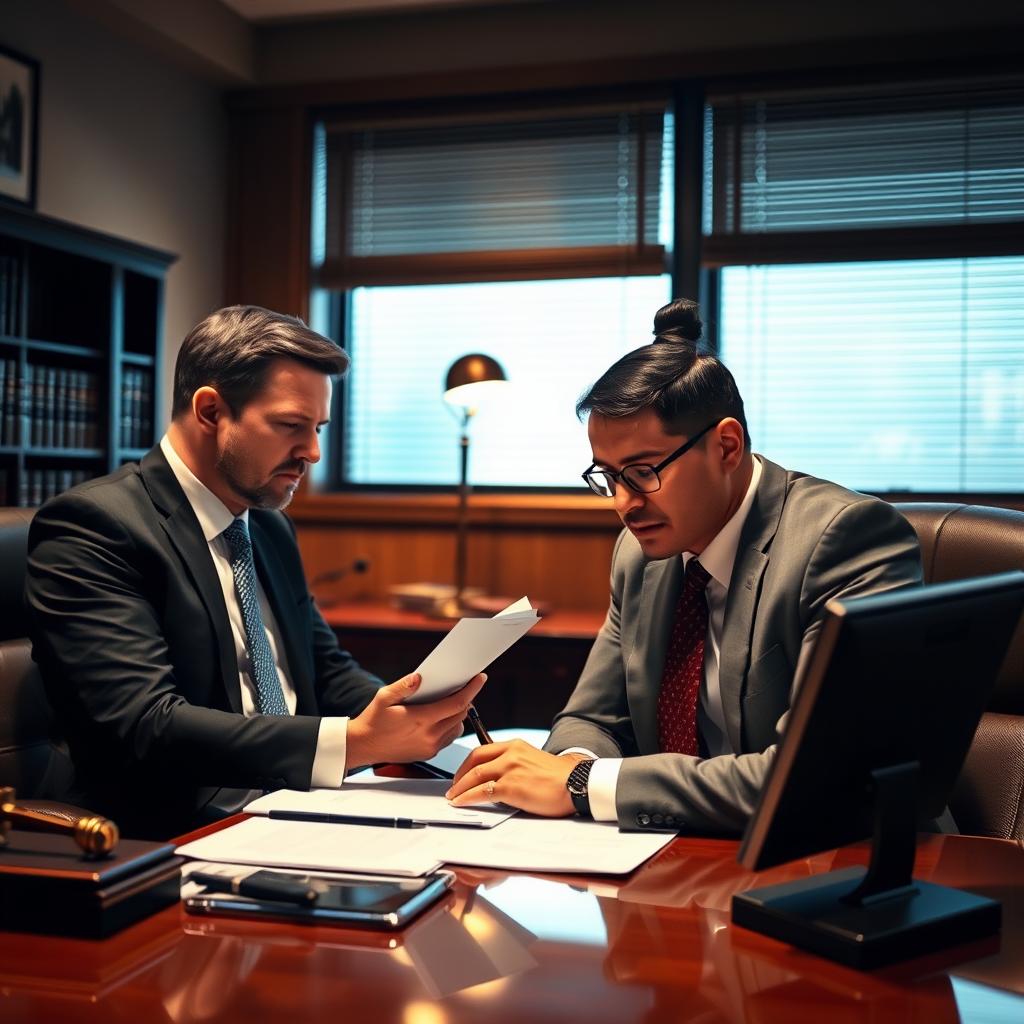
Gun Possession Lawyer Navy Yard, DC
You were at your home in the Navy Yard neighborhood when D.C. Metropolitan Police officers knocked on the door. A neighbor had reported a noise complaint, and during a brief conversation, the officers asked about a firearm they claimed to have seen inside. Before you fully understood what was happening, you were handcuffed, escorted to a patrol car, and taken to the Metropolitan Police Department’s First District station for booking on a gun possession charge. The charge itself carries the potential for prison time, a criminal record, and lasting consequences for your employment and housing. In that moment, the number that matters is (888) 437-7747. Law Offices Of SRIS, P.C. represents individuals facing gun possession allegations in D.C. Superior Court, including those who live in Navy Yard, Capitol Hill, and every other community served from our Arlington location. The firm’s multi‑state experience and familiarity with the District’s unique federal‑local hybrid prosecution system provide a meaningful starting point for building a defense. Law Offices Of SRIS, P.C. – Advocacy Without Borders.
What Gun Possession Charges Mean in Navy Yard
Navy Yard is a rapidly growing waterfront neighborhood in Southeast Washington, D.C., but its criminal cases—including gun possession charges—are heard at the same courthouse as every other local criminal matter: the D.C. Superior Court, Criminal Division, at 500 Indiana Avenue NW. That court is located just steps from the Judiciary Square Metro station on the Red Line, and the journey from Navy Yard to the courthouse is a short one via the Green Line or a quick drive up South Capitol Street. The court’s procedures, however, are unlike those in any other U.S. City. Washington, D.C., is a federal territory. As a result, the United States Attorney’s Office for the District of Columbia—a federal prosecutor’s office—prosecutes violations of the D.C. Code, including unlawful possession of a firearm. A local district attorney’s office does not exist; a person charged with carrying a pistol without a license, possessing an unregistered firearm, or being a felon in possession of a gun will face a federal prosecutor in a local court.
That structure alone creates a more demanding legal environment than what exists in neighboring Maryland or Virginia. The Pretrial Services Agency, also a federal entity, handles release decisions instead of a traditional cash bail system. The agency assesses risk and recommends conditions to the court, but the absence of a scheduled bond amount does not mean a person is past results do not guarantee a similar outcome release. A history of prior convictions, an open case, or the nature of the firearm involved can tilt a recommendation toward detention. At the same time, the Metropolitan Police Department’s patrol of Navy Yard is active; the neighborhood’s proximity to Nationals Park, the Navy Yard waterfront, and major thoroughfares means a visible police presence and frequent stops. Any encounter that leads to a weapon recovery can result in a felony charge under D.C. Code § 22-4504, which makes carrying a pistol without a license punishable by up to five years of incarceration. Other charges—possession of an unregistered firearm, possession of ammunition, or possession by a prohibited person—each carry their own statutory ranges. Because the U.S. Attorney’s Office handles the prosecution, the case proceeds under federal evidentiary and procedural norms even though it is tried in the local Superior Court.
How Mr. Sris and His Of Counsel Handle Gun Possession Cases
Every gun possession case begins with the facts of the police encounter. Mr. Sris and his Of Counsel examine whether the initial stop, the search that led to the weapon’s discovery, or any subsequent questioning complied with the constitutional protections that apply in the District. The Fourth Amendment’s protections against unreasonable search and seizure are the first line of inquiry: if officers lacked reasonable suspicion to stop a person or probable cause to search a vehicle, residence, or person, any firearm recovered may be subject to suppression. In D.C. Superior Court, motions to suppress are heard by the trial judge, and a successful suppression motion can lead to the dismissal of the charge. The firm also scrutinizes whether any statement made by the accused was voluntary and whether Miranda warnings were properly administered. Because the U.S. Attorney’s Office prosecutes these cases, the discovery process often yields a substantial volume of police reports, body‑worn camera footage, and forensic reports, all of which the Of Counsel team reviews thoroughly.
Beyond litigating Fourth Amendment issues, the firm’s approach involves evaluating the government’s ability to prove every element of the offense. For a carrying‑a‑pistol‑without‑a‑license charge, the prosecutor must establish that the defendant knowingly carried a pistol, that the pistol was operable, and that the defendant did not possess a valid license issued by the District. For a possession‑by‑a‑prohibited‑person charge, the government must prove the defendant’s prior disqualifying conviction. The firm investigates each element, identifies weaknesses in the prosecution’s case, and negotiates with the Assistant U.S. Attorney when a resolution short of trial serves the client’s interests. If a plea is not in the client’s best interest, the case proceeds to trial. Mr. Sris and his Of Counsel have experience presenting defense theories to D.C. Superior Court juries and are familiar with the judges, courtroom dynamics, and procedural expectations unique to that courthouse. Throughout the process, the client is advised of the immigration consequences, professional licensing implications, and firearm‑rights repercussions that a conviction can carry long after any sentence is served.
About Mr. Sris and His Of Counsel Team
Mr. Sris, Owner and Founder of Law Offices Of SRIS, P.C., has been practicing law since 1997. He is a former prosecutor who brings an insider’s understanding of how the government builds its cases, and he has concentrated his practice on criminal defense across five jurisdictions: Virginia, Maryland, the District of Columbia, New Jersey, and New York. In the District, he has appeared in D.C. Superior Court on behalf of clients facing a wide range of allegations, including weapons offenses. His legislative experience includes testimony before the Virginia House Courts of Justice Committee in support of 2019 HB 635 (chief patron Del. David Bulova).
Supporting Mr. Sris is a team of Of Counsel attorneys who bring extensive combined legal experience to every matter. One Of Counsel, admitted in Virginia and the District of Columbia, has spent more than thirty years handling complex felonies and has a background challenging technical evidence—an asset when forensic firearms analysis or DNA evidence is at issue. Another Of Counsel, with prosecutorial experience in Maryland, contributes to case preparation and strategy. Collectively, Mr. Sris and his Of Counsel bring extensive combined legal experience. Results may vary.
Frequently Asked Questions
Who prosecutes gun possession cases in Washington, D.C.?
Criminal cases in D.C., including gun possession charges, are prosecuted by the United States Attorney’s Office for the District of Columbia (USAO‑DC). Unlike most states, the District has no locally elected district attorney. Because D.C. Is a federal territory, a federal prosecutor handles violations of the D.C. Code that are heard in the Superior Court. This means a person facing a gun charge in Navy Yard will be opposed by a federal prosecutor with significant resources, making experienced defense counsel essential.
Does D.C. Use cash bail for gun possession arrests?
No, the District of Columbia does not use a traditional cash bail system. The Pretrial Services Agency, a federal agency, interviews the arrested person, conducts a risk assessment, and makes a release recommendation to the court. The judge then decides whether to release the individual on personal recognizance, impose conditions such as home confinement or GPS monitoring, or order pretrial detention. The absence of cash bail does not guarantee release, and the seriousness of a gun charge can influence the court’s decision.
What is the penalty for carrying a pistol without a license in D.C.?
Carrying a pistol without a license is a felony under D.C. Code § 22‑4504 and is punishable by up to five years of imprisonment. The court may also impose a fine, a period of supervised release, and other conditions. Additional gun‑related charges—such as possession of an unregistered firearm or unlawful possession of ammunition—can be charged alongside the carrying charge, potentially increasing the total exposure. Every case is fact‑specific, and the actual sentence depends on the defendant’s criminal history and the circumstances of the offense.
Can I get a gun possession charge sealed from my record in D.C.?
Yes, D.C. Law allows for the sealing of certain criminal records, including some gun possession dispositions. Under D.C. Code § 16‑803, a person may petition to seal an arrest that did not lead to a conviction, a case that was dismissed, or a qualifying conviction after a waiting period. Eligibility depends on the specific charge, the outcome, and the person’s overall record. An experienced attorney can evaluate whether a particular gun possession matter qualifies for sealing and guide the client through the petition process in D.C. Superior Court.
What should I do immediately after being arrested for a gun possession charge in Navy Yard?
The most important steps are to remain silent and request to speak with an attorney. Anything said to law enforcement—even a statement meant to explain the situation—can be used by the prosecution. After being arrested, exercise the right to remain silent and ask to contact a lawyer. Do not discuss the facts of the case with anyone except the attorney. Promptly reaching out to defense counsel allows the attorney to protect the client’s rights from the earliest stages, including the initial appearance before a D.C. Superior Court judge. Contact Law Offices Of SRIS, P.C. at (888) 437-7747 to request a consultation.
For a full statutory analysis and additional guidance on DC criminal defense, visit our firm’s Washington, D.C. Criminal Defense hub page.
Primary legal sources: D.C. Code (official) | DC Superior Court
Attorney advertising. Prior results do not guarantee a similar outcome. Results may vary.
Case results depend on a variety of factors unique to each case.