
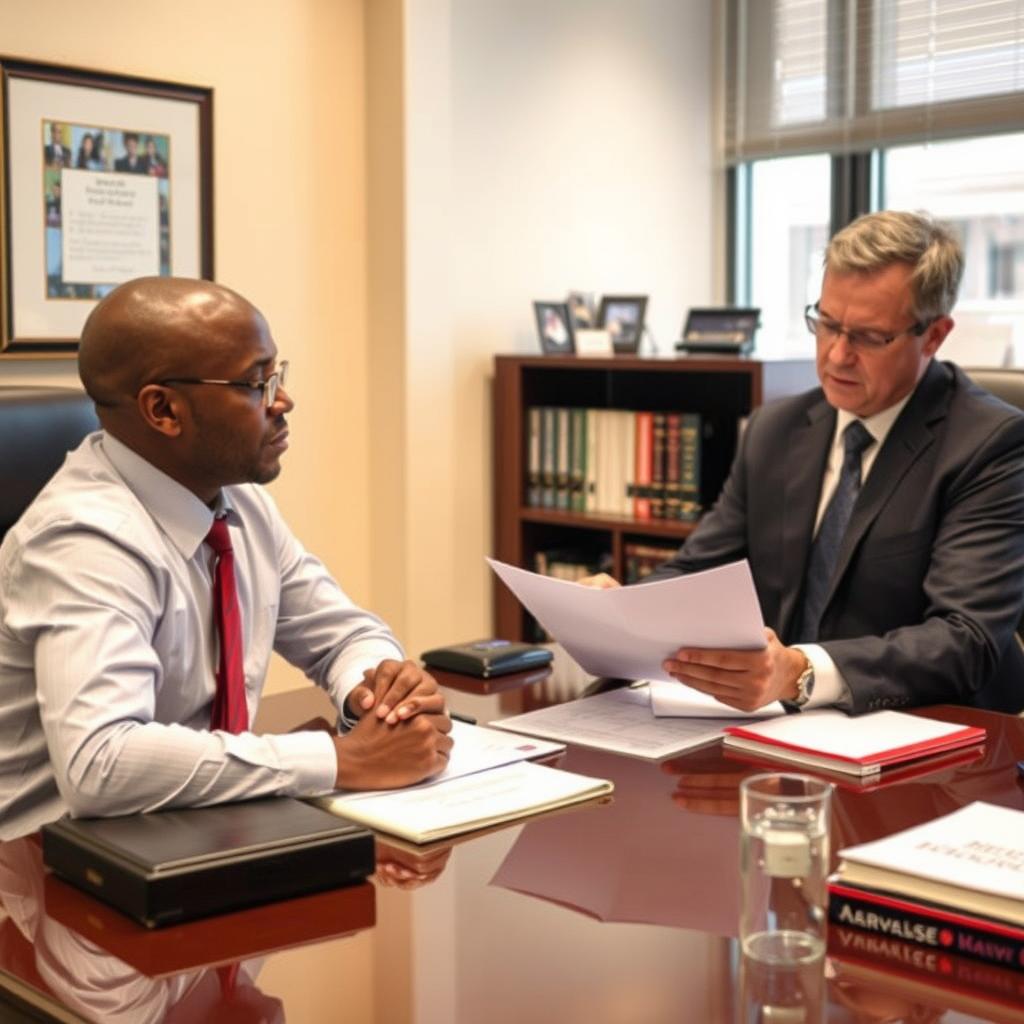
Drug Distribution Lawyer Columbia Heights, DC
Drug distribution charges in Columbia Heights can expose you to serious consequences under the District of Columbia’s unique criminal justice system. Unlike most U.S. Cities, Washington, D.C. Operates as a federal district where local crimes are prosecuted by federal prosecutors. The United States Attorney’s Office for the District of Columbia (USAO‑DC) handles drug distribution cases brought under the D.C. Code, while the D.C. Superior Court at 500 Indiana Avenue NW hears these matters. If you or someone close to you is facing a drug distribution charge in Columbia Heights, understanding how the system works and having an experienced defense team on your side is critical. Law Offices Of SRIS, P.C. represents individuals in criminal cases throughout the District of Columbia. Reach our firm at (888) 437‑7747 to request a consultation. Law Offices Of SRIS, P.C. – Advocacy Without Borders.
Law Offices Of SRIS, P.C. — Practicing since 1997. Admitted in Virginia, Maryland, the District of Columbia, New Jersey, and New York. Spanish‑speaking staff available. By appointment only.
Understanding Drug Distribution Charges in Columbia Heights, DC
In the District of Columbia, drug distribution includes not only the sale or transfer of a controlled substance but also possession with the intent to distribute. Prosecutors may rely on circumstantial evidence — such as the quantity of drugs, packaging materials, scales, cash, or witness statements — to argue that an individual intended to distribute rather than simply possess. Even a charge that begins as a possession case can be elevated to distribution if the government believes the evidence supports that theory.
Columbia Heights residents arrested on drug distribution allegations typically appear at the D.C. Superior Court Criminal Division. Because D.C. Is a federal district, the United States Attorney’s Office prosecutes these cases under the D.C. Criminal Code. This creates a hybrid dynamic: local law enforcement makes the arrest, but federal prosecutors handle the courtroom. The Pretrial Services Agency, a federal agency, conducts risk assessments and makes release recommendations — D.C. Does not use cash bail for most offenses. The unique prosecutorial structure means that defense counsel must understand both local police procedures and the approach of the U.S. Attorney’s Office.
Counsel appearing on criminal matters at the District of Columbia.
Our Arlington location serves clients in Columbia Heights and throughout the District. While we do not maintain a physical office in the city, we regularly appear at the D.C. Superior Court and are well‑acquainted with the court’s procedures, the expectations of the USAO‑DC, and the options available under D.C. Law for individuals charged with drug distribution.
How Mr. Sris and His Of Counsel Handle Drug Distribution Cases
Every drug distribution case starts with a thorough review of the government’s evidence. Mr. Sris and his Of Counsel examine every step of the investigation — from the initial stop or search to the handling and testing of alleged controlled substances. Weaknesses in the chain of custody, failures to properly obtain search warrants, or violations of the defendant’s constitutional rights can all form the basis for motions to suppress evidence or dismiss charges entirely.
When suppression is not an option, the defense strategy shifts toward negotiation or trial preparation. Mr. Sris and his Of Counsel have extensive combined legal experience in negotiating with the U.S. Attorney’s Office in the District of Columbia. They work to identify potential alternatives, such as diversion programs, deferred sentencing agreements, or charge reductions, that may be available under D.C. Law. If the case proceeds to trial, the team is prepared to challenge the government’s evidence, cross‑examine witnesses, and present a defense that highlights reasonable doubt.
About Mr. Sris and His Of Counsel Team
Mr. Sris, Owner and Founder of Law Offices Of SRIS, P.C., is a former prosecutor who founded the firm in 1997. He brings decades of criminal courtroom experience and an insider’s understanding of how the prosecution builds its case. Over his career, Mr. Sris has cultivated a multi‑state practice that extends across Virginia, Maryland, the District of Columbia, New Jersey, and New York. His legislative work includes testimony before the Virginia House Courts of Justice Committee in support of 2019 HB 635 (chief patron Del. David Bulova), reflecting his commitment to the legal process and the communities he serves.
Alongside Mr. Sris, a team of experienced Of Counsel attorneys collaborates on drug distribution defense. These attorneys bring their own considerable trial backgrounds, including experience in challenging scientific evidence such as drug analyses and electronic surveillance data. The collective approach means that every client benefits from the insight of multiple legal professionals who work together to identify the strong $1.
Documented Results and Experience
Law Offices Of SRIS, P.C. has documented over 4,739 case results across all practice areas, with a 93%+ favorable outcome rate. Results may vary. The firm’s attorneys have appeared in the D.C. Superior Court on a wide range of criminal charges, including drug distribution, and are familiar with the local courtroom practices and prosecutorial strategies that shape outcomes in Columbia Heights cases.
Frequently Asked Questions
Who prosecutes drug distribution cases in Washington, D.C.?
Drug distribution cases in the District of Columbia are prosecuted by the United States Attorney’s Office for the District of Columbia (USAO‑DC), not a local district attorney. Because D.C. Is a federal territory, federal prosecutors handle local D.C. Code offenses. Cases are heard at the D.C. Superior Court, 500 Indiana Avenue NW. This hybrid system means that the defense must navigate both local police practices and the prosecutorial culture of a federal office.
Does DC have cash bail for drug distribution charges?
No. The District of Columbia does not use a cash bail system. Instead, the Pretrial Services Agency — a federal agency — assesses each defendant’s risk and makes a release recommendation to the court. Most individuals charged with drug distribution are released into the community under supervision while their case proceeds. Conditions of release may include drug testing, stay‑away orders, or electronic monitoring, depending on the PSA’s evaluation.
What constitutes drug distribution under DC law?
Under D.C. Law, drug distribution includes the actual sale, delivery, or transfer of a controlled substance, as well as possession with the intent to distribute. Intent can be inferred from factors such as the quantity of drugs, the presence of packaging materials, scales, large amounts of cash, or testimony from witnesses. Even a single baggie of a controlled substance can lead to a distribution charge if the government believes the evidence supports an intention to sell.
Can a drug distribution charge be reduced to simple possession?
Yes, a drug distribution charge may be reduced to simple possession through negotiation with the U.S. Attorney’s Office. Whether a reduction is possible depends on the strength of the government’s evidence on the distribution element, the defendant’s prior record, and the quantity of drugs involved. An experienced defense attorney can present mitigating factors and challenge the evidence of intent, which may lead the prosecutor to agree to a lesser charge.
What are the possible penalties for drug distribution in DC?
Penalties for drug distribution in the District of Columbia vary based on the type and quantity of the controlled substance and the defendant’s criminal history. D.C. Code provisions authorize incarceration, fines, and probation. Convictions can carry long‑term consequences beyond any sentence imposed by the court, including difficulties with employment, housing, and professional licensing. Each case is unique, and possible outcomes depend heavily on the specific facts.
How does the DC Pretrial Services Agency handle drug distribution cases?
The Pretrial Services Agency conducts a background interview and uses a risk‑assessment tool to recommend release conditions. For drug distribution charges, the PSA may recommend drug testing, regular check‑ins, or participation in treatment programs. The court is not bound by the PSA’s recommendation but typically gives it significant weight. Understanding the PSA process can help a defendant and counsel prepare for the initial court appearance.
How long does a drug distribution case take in DC?
The timeline for a drug distribution case in the District of Columbia varies depending on the complexity of the case and the court’s calendar. Misdemeanor‑class matters may resolve more quickly, while felony‑level drug distribution charges can take months or longer to proceed through pre‑trial motions, plea negotiations, and trial. The court’s scheduling, the availability of forensic evidence, and the number of witnesses all influence the overall timeframe.
Can I get my record sealed after a drug distribution charge in DC?
Record‑sealing in the District of Columbia is available for certain dispositions under D.C. Code § 16‑803. Charges that result in an acquittal, dismissal, or a not‑guilty finding may be eligible for sealing. For convictions, eligibility depends on the offense and the waiting period required by statute. An attorney can review the specific disposition and advise whether a motion to seal is appropriate.
Do I need a lawyer for a drug distribution charge in Columbia Heights?
Yes. Having an experienced criminal defense lawyer is critical when facing a drug distribution charge in the District of Columbia. The federal prosecutorial structure and the evidentiary complexities of distribution cases make self‑representation extremely risky. Counsel can challenge the government’s proof, negotiate with the U.S. Attorney’s Office, and protect a defendant’s rights throughout the process.
What should I do if I’m arrested for drug distribution in DC?
If you are arrested for drug distribution in the District of Columbia, remain silent and ask to speak with an attorney. Do not discuss the facts of your case with law enforcement or anyone else. Invoke your right to counsel immediately. Contact a criminal defense lawyer who practices in D.C. Superior Court as soon as possible so that a defense strategy can be developed from the earliest stage of your case.
Related pages:
Official sources: D.C. Superior Court Criminal Division | District of Columbia Code | U.S. Attorney’s Office for D.C.
Arlington Location (serving Columbia Heights and Washington, D.C.)
1655 Fort Myer Dr, Suite 700, Room 719, Arlington, VA 22209
By appointment. Call (888) 437‑7747 to schedule.
Attorney advertising. Prior results do not guarantee a similar outcome. Results may vary.
© 1997‑2026 Law Offices Of SRIS, P.C.
Case results depend on a variety of factors unique to each case.