
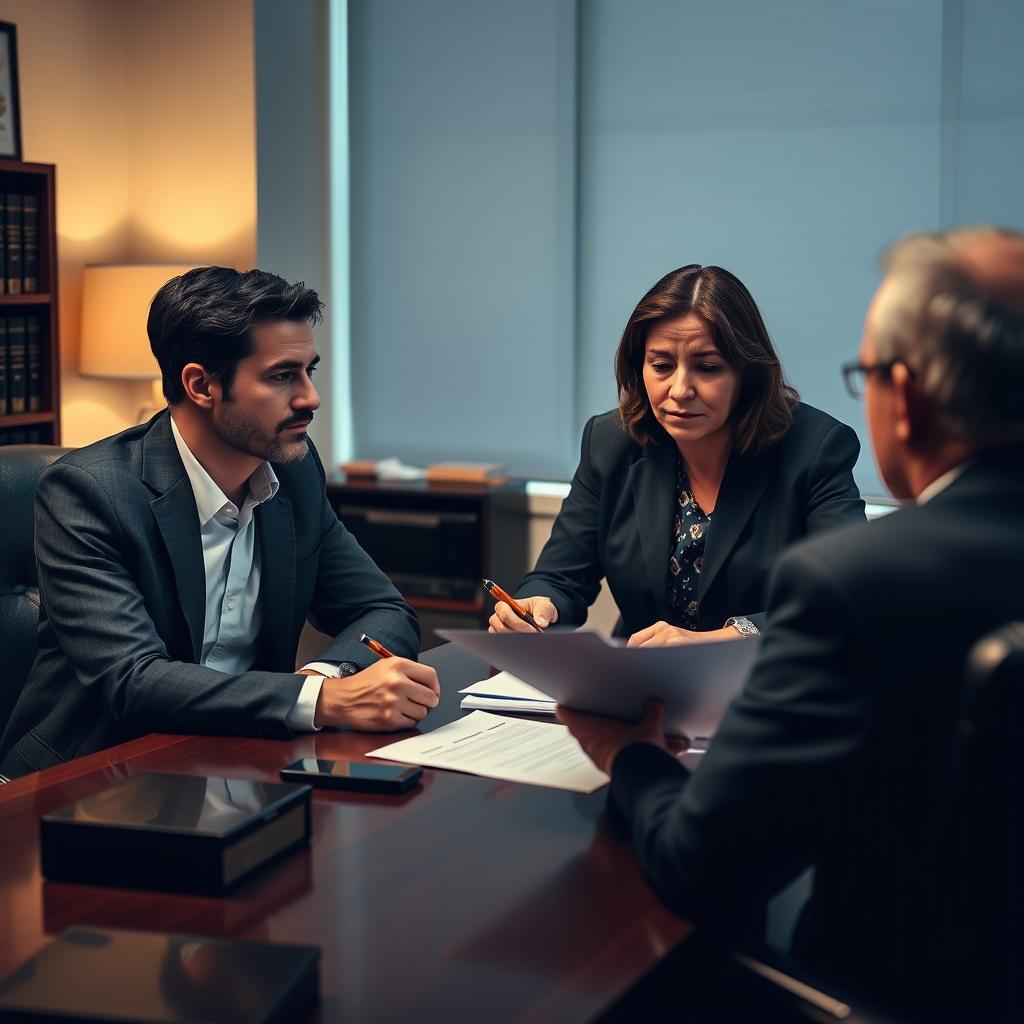
Credit Card Fraud Lawyer Columbia Heights, DC
If you are facing credit card fraud allegations in Columbia Heights, contact us to request a consultation. Criminal charges involving fraudulent use of credit cards or financial instruments in the District of Columbia are prosecuted by the United States Attorney’s Office for the District of Columbia (USAO‑DC) at the DC Superior Court, located at 500 Indiana Avenue NW. The federal‑local hybrid jurisdiction of DC means that local offenses under the D.C. Code are handled by federal prosecutors, and the Pretrial Services Agency — not a traditional cash‑bail system — determines pretrial release conditions. Mr. Sris and the firm’s Of Counsel attorneys represent individuals in Columbia Heights and throughout the District who are confronting credit card fraud investigations or charges. To request a consultation, call (888) 437‑7747.
Law Offices Of SRIS, P.C. – Advocacy Without Borders.
What Credit Card Fraud Means in Columbia Heights, DC
Credit card fraud in the District of Columbia is a criminal offense defined under D.C. Code Title 22. The term encompasses a range of conduct, including using a stolen or forged credit card to obtain goods or services, possessing devices to create counterfeit cards, and obtaining credit card account information with fraudulent intent. Because Washington, D.C., operates under a unique federal/local hybrid structure, credit card fraud charges are prosecuted by the USAO‑DC, the same office that prosecutes federal crimes in the U.S. District Court. Cases are heard in the DC Superior Court, which sits at 500 Indiana Avenue NW, within the Judiciary Square area, easily accessible from Columbia Heights via the Metro’s Green and Red Lines.
In Columbia Heights and the surrounding neighborhoods along 14th Street and the Mount Pleasant border, a person arrested for credit card fraud may first be processed at the Metropolitan Police Department’s Third District station before being taken to court for an initial appearance before a Superior Court magistrate judge. The Pretrial Services Agency (PSA), a federal agency, interviews the person and issues a risk‑assessment report to the court, which then determines whether to release the person with supervision or, in limited circumstances, to order detention. The absence of cash bail in DC means that certain release conditions, such as check‑ins or electronic monitoring, often replace monetary bonds. The statutory provisions governing credit card fraud provide for substantial penalties, and a conviction can carry consequences beyond incarceration, including a permanent criminal record and immigration implications for non‑citizens. Mr. Sris and the firm’s Of Counsel attorneys understand how the PSA process plays out in DC and represent clients at every stage, from initial appearance through trial or negotiation.
How Mr. Sris and His Of Counsel Handle Credit Card Fraud Cases
Mr. Sris and the firm’s Of Counsel attorneys begin by examining the case from the perspective of both the prosecution and the defense. They scrutinize the evidence the government intends to present — transaction records, witness statements, surveillance video, and electronic data — to identify weaknesses in the chain of custody, problems with forensic analysis, or violations of the Fourth Amendment. Because credit card fraud investigations frequently involve multiple law enforcement agencies, including the MPD, the Secret Service, and the U.S. Postal Inspection Service, it is critical to understand whether the investigation complied with applicable legal standards. The attorneys also evaluate whether the government can prove every element of the charged offense beyond a reasonable doubt.
Where the facts support it, the defense may involve pretrial motions to suppress evidence, dismissal of charges for lack of probable cause, or negotiation with the USAO‑DC for a reduced charge or alternative resolution. DC offers certain diversion and deferred‑disposition programs for eligible defendants, and an experienced attorney can advise on whether a client may qualify. The firm’s approach emphasizes thorough preparation: each client receives an evaluation of the specific D.C. Code statutes under which they are charged, a discussion of the possible penalties, and a realistic assessment of the available options. Throughout the process, Mr. Sris and the firm’s Of Counsel attorneys keep the client informed and involved in decision‑making.
About Mr. Sris and the Firm’s Of Counsel Attorneys
Mr. Sris is the Owner and Founder of Law Offices Of SRIS, P.C. He is a former prosecutor who founded the firm in 1997, and he is admitted to practice in Virginia, Maryland, the District of Columbia, New Jersey, and New York. Mr. Sris testified before the Virginia House Courts of Justice Committee in support of 2019 HB 635 (chief patron Del. David Bulova). Mr. Sris and the firm’s Of Counsel attorneys bring extensive combined legal experience representing individuals in criminal matters throughout the District, including credit card fraud cases at the DC Superior Court. Results may vary.
The firm’s Of Counsel attorneys include lawyers with deep backgrounds in criminal defense, complex felony litigation, and child‑protective proceedings. The firm’s practice is collaborative: Mr. Sris and the firm’s Of Counsel attorneys work together to develop case strategies that draw on the prosecutorial and law‑enforcement experience within the firm. Clients served from the firm’s Arlington location — 1655 Fort Myer Dr, Suite 700, Room 719, Arlington, VA 22209, by appointment — benefit from a location approximately 4.5 miles from the DC Superior Court, with convenient access via I‑395 and the Metro. Call (888) 437‑7747 to schedule a consultation.
Frequently Asked Questions
Who prosecutes credit card fraud cases in Washington, D.C.?
Criminal cases in DC, including credit card fraud, are prosecuted by the United States Attorney’s Office for the District of Columbia (USAO‑DC), not a local district attorney. Because Washington, D.C., is federal territory, local crimes under the D.C. Code are handled by federal prosecutors. Cases are heard at the DC Superior Court, 500 Indiana Avenue NW, Washington, DC 20001. Mr. Sris and the firm’s Of Counsel attorneys are familiar with the USAO‑DC’s practices and can represent clients facing credit card fraud allegations in the District.
What should I do if I am arrested for credit card fraud in D.C.?
If you are arrested for credit card fraud in the District, exercise your right to remain silent and ask to speak with an attorney at the earliest opportunity. Do not discuss the facts of the case with law enforcement or anyone else until you have consulted counsel. Contact an experienced criminal defense attorney who practices in DC Superior Court to protect your rights from the outset. Early intervention can be critical in shaping the outcome of the PSA release assessment and in preserving favorable evidence.
What are the penalties for credit card fraud in the District of Columbia?
Penalties for credit card fraud under the D.C. Code depend on the specific charge, the value of the alleged transaction, and the defendant’s prior record. A conviction can result in incarceration, fines, restitution, and probation. Some credit card fraud offenses are felonies carrying potential prison sentences of several years. A conviction may also affect immigration status, employment opportunities, and professional licenses. Because the USAO‑DC prosecutes these offenses, cases can involve both D.C. Code and federal statutes. Mr. Sris and the firm’s Of Counsel attorneys can evaluate the specific charges and explain the possible consequences.
Does DC have cash bail for credit card fraud cases?
No; Washington, D.C., does not use a traditional cash‑bail system. Following an arrest, the Pretrial Services Agency (PSA) — a federal agency — conducts a risk assessment and recommends release conditions to the DC Superior Court. Most defendants are released without posting money, often with conditions such as regular check‑ins, drug testing, or GPS monitoring. Detention is ordered only when the court finds that no combination of conditions reasonably can ensure community safety or the person’s return to court. Mr. Sris and the firm’s Of Counsel attorneys can advocate for the least restrictive conditions during the PSA process and at the initial appearance.
Can a credit card fraud conviction be expunged in D.C.?
Record sealing, not traditional expungement, is available in the District of Columbia for certain offenses. Under D.C. Code § 16‑801 et seq., a person who was convicted of an eligible felony or misdemeanor may petition the DC Superior Court to seal the record after a waiting period. For some dismissed or “not‑guilty” cases, sealing may be available sooner. The firm’s attorneys can review the specific charge and advise whether record‑sealing may be an option after the conclusion of the case.
Why should I hire a lawyer for a credit card fraud charge in D.C.?
An experienced criminal lawyer can identify legal and evidentiary weaknesses, negotiate with the USAO‑DC, and protect your rights throughout the criminal process. Credit card fraud cases involve complex financial records, electronic evidence, and interactions with multiple law enforcement agencies. An attorney who regularly practices at the DC Superior Court understands how the USAO‑DC prosecutes these offenses and can develop a defense tailored to the specific facts. Early legal guidance may influence the PSA’s release recommendation and help secure a favorable resolution. For a consultation, call (888) 437‑7747.
Serving clients across the District of Columbia: Washington, D.C. Criminal Defense | Georgetown Criminal Lawyer | Spring Valley Criminal Defense | Cleveland Park Criminal Attorney | Chevy Chase DC Criminal Lawyer
Attorney advertising. Prior results do not guarantee a similar outcome.
Results may vary.
Law Offices Of SRIS, P.C. — (888) 437‑7747.
Case results depend on a variety of factors unique to each case.