
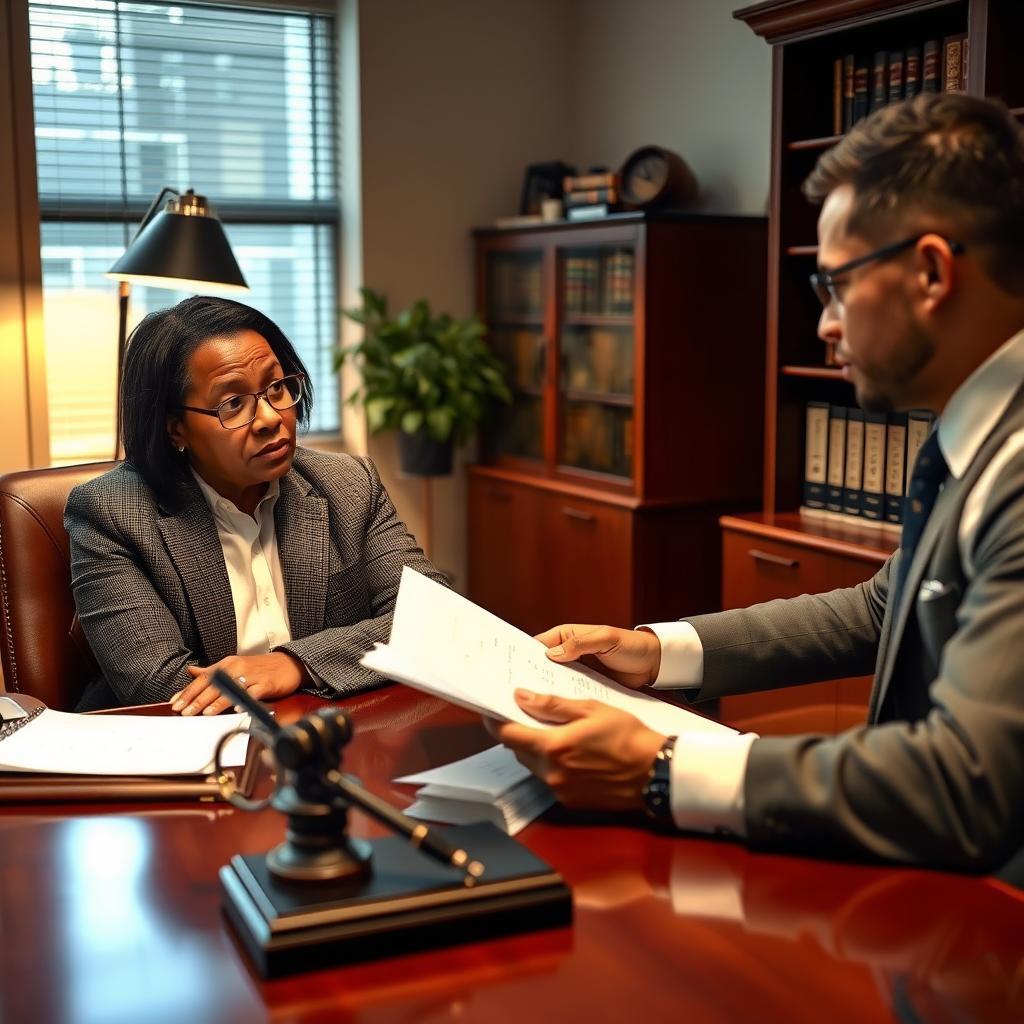
Gun Possession Lawyer Anacostia, DC
If you have been charged with unlawful possession of a firearm in Anacostia, Southeast Washington, D.C., you face a prosecution system quite different from most local jurisdictions. The District of Columbia is a federal territory, and the United States Attorney’s Office for the District of Columbia (USAO-DC) prosecutes criminal offenses under the D.C. Code in the D.C. Superior Court. This means your case is handled by federal prosecutors, not a local district attorney. At Law Offices Of SRIS, P.C., we represent people in Anacostia, Congress Heights, Barry Farm, and other neighborhoods in this complex legal environment. Our firm, practicing since 1997, helps individuals navigate gun-possession charges and works toward resolutions that protect their rights and future. To request a consultation about your situation, reach our firm at (888) 437-7747. Law Offices Of SRIS, P.C. – Advocacy Without Borders.
What Gun Possession Means in Anacostia
Anacostia sits east of the Anacostia River in Ward 8, a neighborhood with close ties to the broader Southeast community. When someone is arrested for a firearm offense—whether by the Metropolitan Police Department or another agency—the matter proceeds at the D.C. Superior Court, Criminal Division, located at 500 Indiana Avenue NW. Because Washington, D.C., operates under a unique federal-local hybrid structure, the United States Attorney’s Office for D.C. Prosecutes these cases as violations of the D.C. Code, not as state criminal charges.
Local law enforcement treats unlawful-gun cases seriously. The most common charge is carrying a pistol without a license, which can result in a prison sentence of up to five years under the applicable provisions of D.C. Code Title 22. Additional charges—such as possession of an unregistered firearm, possession of a firearm by a person with a prior felony conviction, or possession of a firearm in a prohibited location—may also be filed. One critical local procedural fact is that the District does not use traditional cash bail; instead, the Pretrial Services Agency, a federal agency, assesses risk and recommends release conditions. Understanding how to present a client’s ties to the Anacostia community and argue for release under this system can materially affect the pretrial posture of the case. Our attorneys are familiar with the D.C. Superior Court’s practices and work to address each charge with a strategy tailored to the circumstances.
How Mr. Sris and His Of Counsel Handle Gun Possession Cases
Defending against a gun charge in D.C. Requires a thorough review of the stop, search, and arrest. Our approach begins by examining the facts: Was the firearm discovered during a warrantless search? Did law enforcement have reasonable suspicion or probable cause? Did the arresting officer comply with constitutional and local procedural requirements? As a matter of practice, Mr. Sris and his Of Counsel team scrutinize police reports, witness statements, and forensic evidence to identify potential motions to suppress or grounds for dismissal.
We also address pretrial release advocacy immediately. Because D.C. Relies on the Pretrial Services Agency’s risk assessment rather than cash bail, we present information about the client’s residence in Anacostia, employment, family support, and community involvement to support a request for release under the least restrictive conditions possible. Throughout the proceedings, we communicate regularly with the client, explain the prosecution’s case, and advise on the potential benefits and risks of proceeding to trial versus pursuing a negotiated resolution. The goal is to work toward a favorable outcome—whether that means a dismissal, an acquittal, or a charge reduction—while keeping the client informed at every stage.
About Mr. Sris and His Of Counsel Team
Mr. Sris, Owner and Founder of Law Offices Of SRIS, P.C., is a former prosecutor who has practiced law since 1997. He is admitted to the bars of Virginia, Maryland, the District of Columbia, New Jersey, and New York, giving the firm a multi-jurisdictional perspective that is especially valuable in the federal-city environment of Washington, D.C. His Of Counsel team includes attorneys admitted to practice in the District of Columbia and Virginia, who appear regularly in D.C. Superior Court on criminal matters. The group draws on decades of collective criminal-defense experience and a deep familiarity with the local courts, the U.S. Attorney’s Office, and the Pretrial Services Agency. Together, Mr. Sris and his Of Counsel provide hands-on, individualized representation to clients throughout the District.
Frequently Asked Questions
What constitutes illegal gun possession in Washington, D.C.?
Unlawful gun possession in D.C. Includes carrying a pistol without a license, possessing an unregistered firearm, and possessing a firearm as a person with a prior felony conviction. The primary statute is D.C. Code § 22-4504, which prohibits carrying a concealed pistol without a license. Possession of an unregistered firearm is covered by § 7-2502.01, and possession of a firearm by a convicted felon is illegal under § 22-4503. The D.C. Metropolitan Police and other agencies enforce these laws, and charges can be brought even if the gun was not used in another crime.
How are gun possession cases prosecuted in DC?
Gun offenses under the D.C. Code are prosecuted by the United States Attorney’s Office for the District of Columbia—not a local district attorney. Cases are heard in the D.C. Superior Court, Criminal Division, at 500 Indiana Avenue NW. Because Washington, D.C., is a federal territory, the USAO-DC handles both local D.C. Code offenses and federal crimes. A defendant may qualify for representation by the Public Defender Service for D.C. Or may retain private counsel. The Pretrial Services Agency, a federal entity, conducts risk assessments and recommends release conditions instead of using a cash bail system.
What are the penalties for carrying a pistol without a license?
A first offense of carrying a pistol without a license can result in up to five years in prison. Under D.C. Code § 22-4504, the maximum term of imprisonment is five years, and the court may also impose fines and a period of supervised release. A subsequent offense for a person previously convicted of a gun crime can carry a mandatory minimum sentence under federal law if the case is prosecuted federally, but the specific sentence depends on the facts and the applicable statutory provisions.
Does DC have cash bail?
No. Washington, D.C., does not use cash bail for most offenses. Instead, the Pretrial Services Agency (PSA) evaluates each defendant’s risk of flight and danger to the community, then recommends conditions of release—such as supervised release, stay-away orders, or electronic monitoring. A judge makes the final release decision after considering the PSA assessment and any arguments from counsel. A person charged can be held without bond only if the government meets a heightened standard under D.C. Law. This system makes it important to present comprehensive background information to the court early in the process.
Can a gun possession conviction be sealed in D.C.?
Yes, some gun-possession convictions can be sealed after a waiting period under D.C. Code § 16-803. For felony offenses, the waiting period is generally eight years after completion of the sentence, and for misdemeanors it is typically four years. Certain disqualifying factors—such as having a pending case or certain other convictions—may affect eligibility. The petition is filed in the D.C. Superior Court that handled the original case. A lawyer can evaluate whether the specific offense qualifies and help prepare the necessary filings.
Do I need a lawyer for a gun possession charge in Anacostia?
While you are not legally required to hire a lawyer, having experienced counsel for a gun charge in D.C. Can significantly affect the outcome. Gun-possession cases carry the potential for incarceration, a criminal record, and collateral consequences such as loss of employment or firearm rights. An attorney can challenge the legality of the search, negotiate with the United States Attorney’s Office, and advocate for alternatives to detention. Because the local rules and the role of the Pretrial Services Agency are unique to the District, representation by a practitioner familiar with D.C. Superior Court is particularly valuable. To discuss your situation, reach Law Offices Of SRIS, P.C. at (888) 437-7747.
Additional Resources: Criminal Defense Lawyer Washington, D.C. | Criminal Lawyer Georgetown | Criminal Defense Spring Valley
Attorney advertising. Prior results do not guarantee a similar outcome. Results may vary.
Case results depend on a variety of factors unique to each case.