
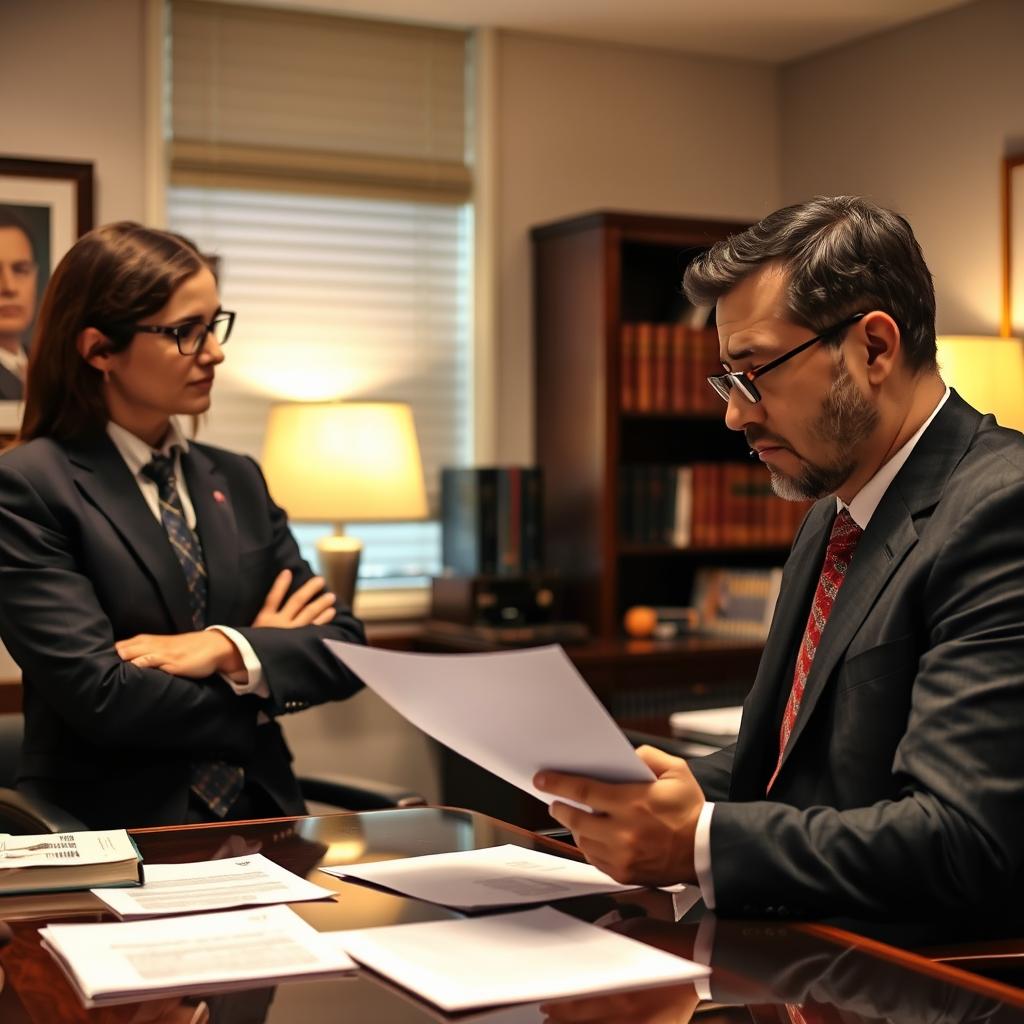
Grand Larceny Lawyer Logan Circle, DC
An accusation of grand larceny in the Logan Circle area brings the full weight of the District of Columbia’s criminal justice system to bear. Unlike most American cities, Washington, D.C. Does not have a locally elected district attorney. Instead, the United States Attorney’s Office for the District of Columbia prosecutes felony theft charges — including grand larceny — in the D.C. Superior Court at 500 Indiana Avenue NW. A conviction under the District’s first‑degree theft statute can carry a sentence of up to 10 years of incarceration. Mr. Sris and his Of Counsel concentrate their practice on defending clients against serious theft allegations in Logan Circle and throughout the District of Columbia. They examine every piece of evidence, challenge overvaluation by the prosecution, and work to protect each client’s rights at every stage of the proceeding. For a consultation about a grand larceny matter in Logan Circle, reach our location at (888) 437‑7747. Law Offices Of SRIS, P.C. – Advocacy Without Borders.
What Grand Larceny Means in Logan Circle
In the District of Columbia, grand larceny is prosecuted as first‑degree theft under D.C. Code Title 22. The charge arises when a person is accused of wrongfully obtaining or exerting unauthorized control over another’s property, and the value of the property or services involved exceeds $1,000. Because the dollar amount separates a felony from a misdemeanor petit larceny, the classification and potential penalties hinge heavily on the prosecution’s valuation evidence. Cases are heard at the D.C. Superior Court (Criminal Division), which sits at 500 Indiana Avenue NW — within easy reach of the Logan Circle neighborhood via the Judiciary Square Metro station.
Washington’s unique jurisdictional structure means that local criminal matters are prosecuted by the United States Attorney’s Office, a federal agency. This is a critical distinction: the same office that handles federal offenses also tries street‑level theft cases under the D.C. Code. A person charged with grand larceny in Logan Circle therefore faces a prosecution team with extensive resources and a dual federal‑local perspective. Mr. Sris and his Of Counsel appear regularly before the Superior Court bench and are familiar with the charging practices and procedural expectations in that courthouse. Their advocacy is shaped by an understanding of how the U.S. Attorney’s Office constructs its theft cases — from witness statements and surveillance footage to financial records and the testimony of loss‑prevention officers.
How Mr. Sris and His Of Counsel Handle Grand Larceny Cases
When a client brings a grand larceny charge to Law Offices Of SRIS, P.C., the first step is a thorough review of the charging documents and the evidence the government intends to use. Because the classification of a theft as grand larceny depends on the claimed value, the defense often begins with a careful assessment of the goods or services at issue. Mr. Sris and his Of Counsel examine receipts, appraisals, and the prosecution’s own valuation methodology. In many cases, a reduction of the alleged value to $1,000 or less can move the charge from a felony to a misdemeanor — a significant shift in exposure.
Beyond the numbers, the team investigates every aspect of the government’s case: whether law enforcement followed proper procedures, whether identification of the accused is reliable, and whether any exculpatory evidence exists. In court, Mr. Sris and his Of Counsel challenge the admissibility of weak or improperly obtained evidence and negotiate with the U.S. Attorney’s Office when a plea agreement may serve the client’s best interests. When trial is necessary, they provide a well‑prepared defense aimed at securing an acquittal or a finding of a lesser offense. Throughout the process, they keep the client informed and address each development as it arises.
About Mr. Sris and His Of Counsel Team
Mr. Sris, Owner and Founder of Law Offices Of SRIS, P.C., is a former prosecutor who has practiced criminal defense since founding the firm in 1997. His prosecutorial background gives him insight into how the government builds theft cases, and he brings that perspective to every grand larceny matter the firm handles. Mr. Sris testified before the Virginia House Courts of Justice Committee in support of 2019 HB 635 (chief patron Del. David Bulova). He is admitted to practice in Virginia, Maryland, the District of Columbia, New Jersey, and New York.
The Of Counsel team includes attorneys with extensive experience in complex criminal litigation, including property‑crime defense and challenges to scientific and technical evidence. Together, Mr. Sris and his Of Counsel bring multi‑state experience to each client’s case, drawing on a depth of trial and negotiation skills developed over decades of concentrated practice in the D.C. Superior Court and other jurisdictions. They work collaboratively, ensuring that every grand larceny case benefits from a broad range of legal knowledge and tactical judgment.
Frequently Asked Questions
Who prosecutes a grand larceny charge in Logan Circle?
Grand larceny charges in Logan Circle are prosecuted by the United States Attorney’s Office for the District of Columbia, not by a local district attorney. Because Washington, D.C. Is a federal territory, the U.S. Attorney’s Office handles both local and federal crimes. This means a theft case under the D.C. Code is tried by federal prosecutors in the D.C. Superior Court. Mr. Sris and his Of Counsel are experienced in navigating this unique dual‑jurisdiction system and appear regularly in that courthouse.
What is the difference between grand larceny and petit larceny in D.C.?
The primary difference is the value of the property or services taken: grand larceny (first‑degree theft) involves property worth $1,000 or more, while petit larceny (second‑degree theft) applies when the value is less than $1,000. The classification matters significantly because a grand larceny conviction is a felony and can result in a sentence of up to 10 years, whereas a petit larceny conviction is a misdemeanor with a maximum penalty of 180 days. Challenging the prosecution’s valuation is often a key defense strategy.
Does D.C. Use cash bail for a grand larceny arrest?
No, the District of Columbia does not use a traditional cash‑bail system. Instead, the Pretrial Services Agency — a federal agency — conducts a risk assessment and makes a recommendation to the court regarding conditions of release. Most defendants are released without having to post money. Mr. Sris and his Of Counsel can explain how this process works and advocate for the least restrictive conditions at the initial appearance.
Can a grand larceny record be sealed in Washington, D.C.?
Yes, under D.C. Code § 16‑803, certain grand larceny records may be eligible for sealing after a statutory waiting period, depending on the disposition of the case. For example, cases that end in acquittal or dismissal are generally sealable sooner. For some convictions, sealing may be available after a number of years have passed since the completion of the sentence. An experienced criminal defense lawyer can evaluate whether a particular record qualifies.
How can a defense attorney challenge a grand larceny charge in D.C.?
A defense attorney may challenge a grand‑larceny charge by contesting the alleged value of the property, the identification of the accused, the lawfulness of the stop or arrest, or the reliability of the evidence. In many cases, demonstrating that the property was worth less than the statutory threshold can reduce a felony to a misdemeanor. Other defenses include lack of intent to permanently deprive the owner of the property, consent, or a claim of right. Mr. Sris and his Of Counsel examine every facet of the prosecution’s case to determine the strongest available argument.
Do I need a lawyer if I am accused of grand larceny in Logan Circle?
You are not required to hire a lawyer, but having experienced counsel is critical because a grand‑larceny charge is a felony that can result in a lengthy prison sentence and a permanent criminal record. An attorney can protect your rights during the investigation, challenge the government’s evidence, and negotiate with prosecutors. For a consultation about your situation, contact Mr. Sris and his Of Counsel at (888) 437‑7747.
Related areas of practice:
Washington, D.C. Criminal defense |
Georgetown theft defense |
Theft lawyer Washington, D.C. |
Cleveland Park criminal defense |
Chevy Chase criminal defense
Primary legal sources:
D.C. Code Title 22 — Criminal Offenses |
D.C. Superior Court
Attorney advertising. Prior results do not guarantee a similar outcome. Results may vary.
Case results depend on a variety of factors unique to each case.