
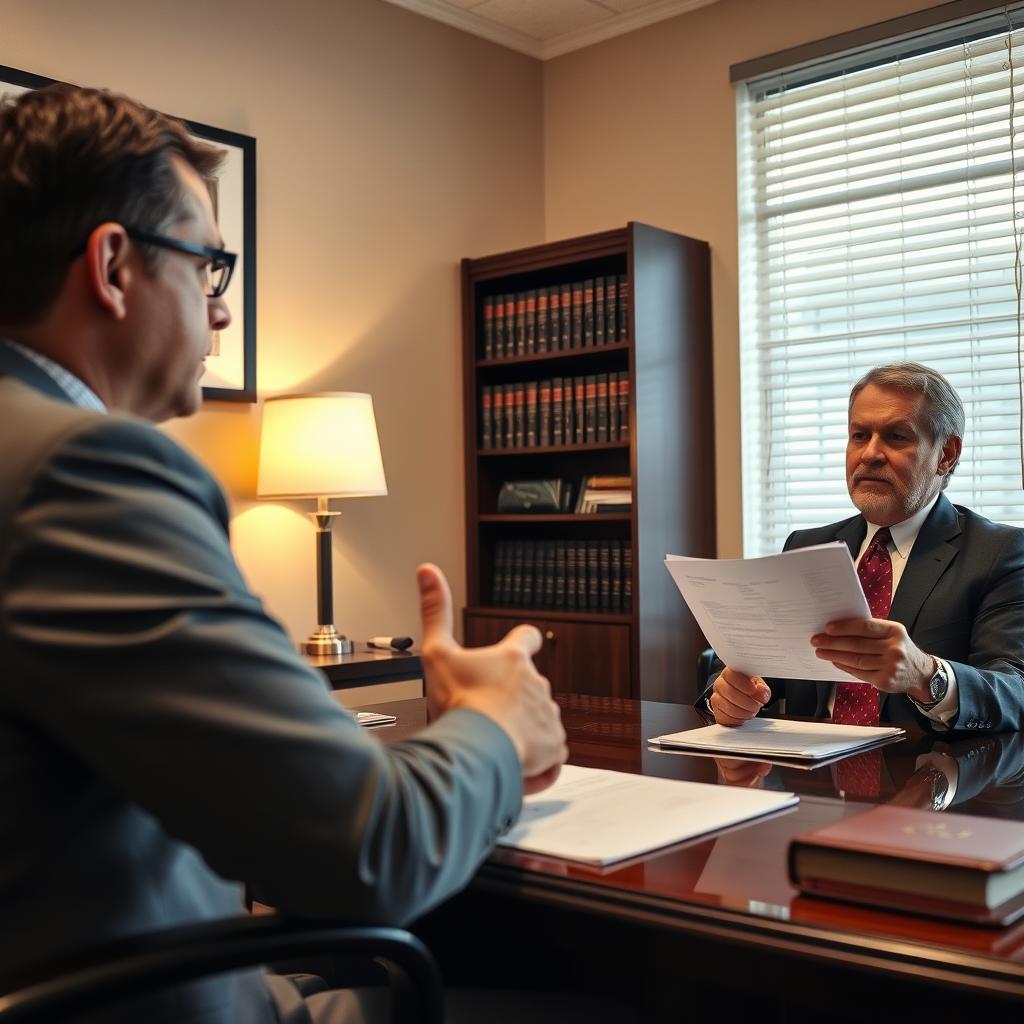
DUI Lawyer Logan Circle, DC
If you are facing a DUI charge in Logan Circle, the legal process may feel unfamiliar. In the District of Columbia, driving under the influence is prosecuted by the United States Attorney’s Office for the District of Columbia — not a local district attorney. This federal‑local hybrid structure, combined with the procedures of D.C. Superior Court, calls for a defense strategy that accounts for how DUI cases actually move through the system. Law Offices Of SRIS, P.C. represents individuals in Logan Circle and throughout Washington, D.C., bringing extensive experience in the jurisdiction’s criminal division. Whether the matter involves a first‑time allegation or a more complex set of circumstances, Mr. Sris and his Of Counsel work to address the specific factors of each case. To speak with a DUI lawyer who practices in Logan Circle, reach Law Offices Of SRIS, P.C. at (888) 437‑7747. Law Offices Of SRIS, P.C. – Advocacy Without Borders.
What DUI Defense Means in Logan Circle
DUI enforcement in Logan Circle falls under D.C. Code Title 50, which defines the offense and its administrative consequences, while related criminal proceedings are heard in the Criminal Division of D.C. Superior Court at 500 Indiana Avenue NW. Because the District of Columbia is not a state, the prosecuting authority is the United States Attorney’s Office for D.C., not a local district attorney. That means federal prosecutors handle what would be local charges in another jurisdiction. The Pretrial Services Agency — also a federal entity — conducts risk assessments and recommends supervised release conditions instead of relying on a cash‑bail system. For someone arrested for DUI in the Logan Circle area, the first appearance typically occurs within 24 hours, and the case then moves through a status calendar that includes motions hearings and, if necessary, a trial before a judge.
Logan Circle’s dense, mixed‑use character brings a distinctive enforcement profile. Officers from the Metropolitan Police Department regularly patrol the area, and DUI stops can arise from traffic‑division checkpoints, 911 calls reporting erratic driving, or observations made during routine patrols around P Street, 14th Street, and the surrounding corridors. The proximity of the courthouse at Judiciary Square means that proceedings unfold quickly; deadlines are driven by the court’s docket rather than by any fixed statutory schedule. A defense approach that understands the pretrial‑services framework, the USAO‑DC charging practices, and the procedural rhythm of D.C. Superior Court can be critical in protecting a person’s driving privileges and avoiding unnecessary consequences.
How Mr. Sris and His Of Counsel Handle Criminal Cases
When a client engages the firm on a DUI matter in Logan Circle, the representation begins with a detailed review of the arrest circumstances. Mr. Sris and his Of Counsel examine the traffic stop, the administration of field‑sobriety exercises, and the handling of any chemical testing — looking closely at whether law enforcement followed constitutionally required procedures. The legal team also gathers evidence that may include video recordings, officer notes, and calibration records for breath‑testing instruments. Because DUI charges can carry both criminal penalties and administrative license consequences, the defense strategy frequently addresses both tracks at the same time, working within the timelines set by the D.C. Department of Motor Vehicles and the Superior Court.
Throughout the case, Mr. Sris and his Of Counsel appear at each scheduled court date and, when appropriate, engage with the assigned Assistant United States Attorney to explore whether a resolution short of trial is possible. In D.C. Superior Court, plea discussions can address the charging statute, the level of the offense, or the conditions of a diversionary disposition where available. If the case is not resolved through negotiation, the team prepares for trial — filing pretrial motions, examining witnesses, and presenting a defense that addresses both the elements of the charged offense and any procedural flaws in the government’s case. The approach is always tailored to the facts and procedural posture of the individual matter, not to a one‑size‑fits‑all template.
About Mr. Sris and His Of Counsel Team
Mr. Sris, Owner and Founder of Law Offices Of SRIS, P.C., is a former prosecutor who has practiced since 1997. He is admitted in Virginia, Maryland, the District of Columbia, New Jersey, and New York. His prosecutorial experience provides insight into how the government builds its DUI cases — particularly in a federal‑local hybrid jurisdiction like D.C., where the United States Attorney’s Office brings the charges. Mr. Sris testified before the Virginia House Courts of Justice Committee in support of 2019 HB 635 (chief patron Del. David Bulova).
Working alongside Mr. Sris, his Of Counsel team contributes extensive combined legal experience in criminal defense matters. Each attorney engaged through Excella brings a depth of trial‑court knowledge that helps the firm address the procedural and evidentiary challenges that arise in DUI prosecutions. The team’s collective practice spans the Criminal Division of D.C. Superior Court and includes substantial familiarity with the Pretrial Services Agency’s risk‑assessment process. Results may vary.
Frequently Asked Questions
Who prosecutes criminal cases in Washington, D.C.?
Criminal cases in D.C., including DUI offenses, are prosecuted by the United States Attorney’s Office for the District of Columbia (USAO‑DC), not a local district attorney. Because the District is federal territory, local crimes under the D.C. Code are handled by federal prosecutors. All DUI‑related criminal matters are heard at D.C. Superior Court, located at 500 Indiana Avenue NW, Washington, D.C. The USAO‑DC brings charges ranging from first‑offense DUI to felony driving‑under‑the‑influence allegations, and the prosecution is typically assigned to an Assistant United States Attorney with experience in the Criminal Division.
Does D.C. Have cash bail?
No, the District of Columbia does not use cash bail. Instead, the Pretrial Services Agency — a federal agency — conducts a risk assessment and makes a recommendation to the court regarding release conditions. For most DUI defendants who have ties to the community and no significant criminal record, release is ordered without requiring any money to be posted. The conditions may include drug or alcohol testing, a stay‑away order, or periodic check‑ins. Failure to comply with conditions can result in the court revisiting the release status.
Can I get a D.C. Criminal record sealed?
Yes, D.C. Law allows certain criminal records to be sealed under D.C. Code § 16‑803. Eligibility includes cases that ended in an acquittal, a dismissal, or a conviction for which the required waiting period has passed. For many DUI‑related convictions, record sealing may be available after a statutory waiting period; for some marijuana‑related offenses, expanded sealing provisions apply. The petition is filed in D.C. Superior Court, and the court considers the nature of the offense, the time elapsed, and the individual’s overall record. Sealing does not automatically erase all consequences, and it is advisable to review the specific eligibility criteria.
What should I do if I am arrested for DUI in Logan Circle?
If you are arrested for DUI, remain calm, do not resist, and exercise your right to remain silent. You are not required to answer questions about where you were or what you consumed. You may be asked to submit to a chemical breath or blood test — refusal can carry administrative license consequences separate from the criminal case. As soon as practicable, contact a lawyer who practices in D.C. Superior Court so that your rights can be protected from the earliest stage. Prompt legal involvement can also help preserve evidence that may be critical to the defense.
How does a DUI case proceed in D.C. Superior Court?
After arrest, the person is brought before a judge at D.C. Superior Court, usually within 24 hours, for an initial appearance where charges are formally presented and release conditions are set. The case is then scheduled for a status hearing, during which the defense and the USAO‑DC may discuss discovery, pretrial motions, or possible resolutions. If no agreement is reached, a trial date is set. Misdemeanor DUI cases are generally tried before a judge without a jury. The timeline from arrest to trial depends on the court’s calendar and the complexity of the issues, but it often spans several months.
Do I need a lawyer for a DUI charge in D.C.?
You are not legally required to hire a lawyer, but the government will be represented by an experienced federal prosecutor who handles DUI cases regularly. A conviction can lead to jail time, fines, license revocation, and a lasting criminal record that may affect employment and housing. An attorney familiar with D.C.’s pretrial‑services system, the USAO‑DC’s charging practices, and the evidentiary standards applied in the Criminal Division can identify procedural errors, challenge the evidence, and negotiate toward a more favorable outcome than a person might obtain without counsel.
Additional criminal defense resources for Washington, D.C.
criminal defense service in Washington, D.C.
criminal representation in Georgetown
criminal lawyer serving Spring Valley
criminal defense in Cleveland Park
criminal matters in Chevy Chase
Primary legal sources
D.C. Superior Court — Criminal Division
District of Columbia Official Code
Attorney advertising. Prior results do not guarantee a similar outcome.
Case results depend on a variety of factors unique to each case.
Results may vary.